Publications
279 publications on climate-policy instruments. Search or filter to find exactly what you need.

Gap Analysis of the Environmental and Social Safeguard Requirements of Voluntary Carbon Market Crediting Programmes
This analysis, commissioned by the Foundation Development and Climate Alliance, assesses how 16 carbon crediting programmes in the voluntary carbon market address environmental and social (E&S) safeguards, benchmarked against the IFC Performance Standards and KfW's sustainability guidelines. It updates and expands a 2024 assessment by Öko-Institut with a framework of 82 criteria across the eight IFC Performance Standard categories, plus additional social criteria and benefit sharing. For each criterion it checks whether the requirement exists in a programme's general standard and whether it is carried through into the documents that project developers complete and validators assess.
PCG · Sandra Dalfiume, Aayushi Singh & Ingrid Wawrzynowicz
Applying corresponding adjustments: Methods and key implications
This CMM-WG discussion paper supports a shared understanding among working group members of how corresponding adjustments are applied under Article 6 of the Paris Agreement. It summarises the Paris rulebook provisions for the multi-year and averaging methods, reviews the relevant literature and examines early experience from the first ITMO authorisations and transfers, initial reports, Article 6 technical expert reviews and Biennial Transparency Reports, including the implications for NDC accounting by host and acquiring Parties. The paper also captures input from a CMM-WG workshop held in September 2026.
PCR · Hanna-Mari Ahonen, Alicia Kathrin Schmid & Aayushi Singh
Paris-alignment in carbon crediting: What it means, why it matters and how it can be implemented
This paper explores what Paris-alignment can mean in the context of carbon crediting, and reflects on why and how it matters. It provides an overview of the elements of Paris-alignment, drawing on existing literature and initiatives, and presents key insights from a workshop on Paris-alignment across carbon credit markets, co-hosted by the Carbon Market Mechanisms Working Group (CMM-WG) and the Integrity Council for the Voluntary Carbon Market.
Hanna-Mari Ahonen & Alicia Kathrin Schmid
Managing Reversal Risk: Assessment, Mitigation and Compensation
This report assesses how reversal risk is handled across CORSIA, PACM, EU CRCF, ICVCM, and leading private standards, identifies where current tools fall short, and sets out concrete recommendations for programmes, policymakers, and buyers.
PCR · Juliana Keßler et al.
How Can the Paris Agreement Crediting Mechanism Deliver Upscaled Crediting?
This report identifies options for upscaled crediting in international carbon markets going beyond specific projects, assesses experiences with such crediting in the past and provides recommendations for the PACM regulators to enable rapid upscaling if significant demand for PACM credits materialises.
PCR · Stephan Hoch et al.
Can Insurance Successfully Address Reversal Risk in Carbon Markets?
This paper examines whether insurance can credibly address the shortcomings of existing reversal mechanisms. Drawing on lessons from property insurance against wildfire risk and the World Bank Group's CDM-era products, it identifies the key design features and limitations that will determine whether insurance can meaningfully contribute to managing reversal risk. The paper also reflects insights from the CMM-WG workshop held on 12 March 2026, which convened insurers, programme experts, and policymakers to debate the path forward.
PCR · Axel Michaelowa & Aayushi Singh
Bridging aid and trade: Exploring synergies between Swedish climate-related development and export finance
This first-of-its-kind report explores how Sweden’s public finance institutions, Sida, Swedfund, EKN, and SEK, can better align to drive global climate action. By benchmarking Sweden against European peers and analyzing institutional portfolios, the study identifies high-impact synergies, necessary policy prerequisites, and potential risks. It provides a strategic roadmap for deepening cooperation between development finance institutions and export credit agencies to maximize climate benefits.
PCR · Max Schmidt et al.
Promoting bio-CCS in the Nordic Region
This paper summarises key takeaways from a Nordic bio-CCS workshop held in Helsinki on 5 December 2025. Bringing together 40 international experts and Finnish stakeholders, the event explored policy options and funding models, including state support and carbon credits. Presentations covered Article 6 of the Paris Agreement, the voluntary carbon market, the EU context, and Nordic case studies, including the Swedish and Danish support schemes and emerging activities in Finland. The workshop was organised under a research project on Nordic bio-CCS cooperation funded by the Swedish Energy Agency, led and coordinated by KTH Royal Institute of Technology and supported by IVL Swedish Environmental Research Institute and Perspectives Climate Research. This project examines the conditions for promoting the capture and durable storage of biogenic carbon dioxide in the Nordic region through carbon market cooperation under Article 6 of the Paris Agreement.
PCR · Hanna-Mari Ahonen & Malte Winkler
Roadmap of the methodology to assess the climate co-benefits of the SUP ban in Tamil Nadu
This roadmap sets out a standardised methodology to assess climate co-benefits of the single-use plastic ban and circular economy programmes in Tamil Nadu. It defines roles for government agencies, urban local bodies and private actors, with short-, medium- and long-term pathways for implementation, capacity building and data-driven monitoring.
PCG · Axel Michaelowa & Ashwin Tomy
Roadmap of the methodology to assess the climate co-benefits of Urban Forestry Initiatives in Tamil Nadu
This roadmap sets out a standardised methodology to assess climate co-benefits of urban forestry in Tamil Nadu. It defines roles for government agencies, urban local bodies and private actors, with short-, medium- and long-term pathways for implementation, capacity building and data-driven monitoring.
PCG · Axel Michaelowa & Ashwin Tomy
Swedish participation in the voluntary carbon market: Guidance for potential buyers and sellers
This study provides the basis for potential recommendations regarding Sweden's evolving voluntary carbon market (2025–2026), providing guidance for Swedish actors who want to engage in the VCM as buyers or sellers. It covers the key terms and guidance on generating and using carbon credits and making related claims, the role of Article 6 of the Paris Agreement, relevant EU and national legislation and initiatives, and risk management relevant for the VCM. Key guidance includes, inter alia, ICVCM, SBTi, ISO, VCMI, and PACM, as well as EU work on CRCF, green claims, and corporate sustainability reporting. Commissioned by the Swedish Energy Agency, the study is published with a complementary slide deck .
PCG · Hanna-Mari Ahonen
Pathways for Strengthening Validation and Verification Body (VVB) Capacity in Africa
This report sets out how a critical infrastructure gap is holding back Africa’s carbon markets potential, and what can be done to address it. Pathways for Strengthening Validation and Verification Body Capacity in Africa, developed by Perspectives Climate Group, and commissioned by the Voluntary Carbon Markets Integrity Initiative and GIZ, shows how building robust, Africa-based validation and verification body (VVB) capacity is essential to enhance carbon markets integrity and ensure greater retention of the economic value of carbon markets within African economies. The report provides a set of clear, actionable steps to scale Africa’s VVB capacity, including: Providing clear policy signals on the role of carbon markets in Nationally Determined Contribution implementation Scaling national and regional accreditation and ISO-aligned training pathways Deploying targeted financial de-risking instruments Integrating digital MRV tools We welcome this practical and system-focused approach and look forward to seeing these recommendations translated into coordinated action.
PCG · Peris Waweru et al.
Roadmap of the methodology to assess the climate co-benefits of the SUP ban in Maharashtra
This roadmap sets out a standardised methodology to assess climate co-benefits of the single-use plastic ban and circular economy programmes in Maharashtra. It defines roles for government agencies, urban local bodies and private actors, with short-, medium- and long-term pathways for implementation, capacity building and data-driven monitoring.
PCG · Axel Michaelowa & Ashwin Tomy
Roadmap of the methodology to assess the climate co-benefits of urban forestry initiatives in Maharashtra
This roadmap sets out a standardised methodology to assess climate co-benefits of urban forestry in Maharashtra. It defines roles for government agencies, urban local bodies and private actors, with short-, medium- and long-term pathways for implementation, capacity building and data-driven monitoring.
PCG · Axel Michaelowa & Ashwin Tomy
Debt-for-Carbon: Using Carbon Credits for Debt Relief
Climate vulnerability countries are confronted with a dual challenge: rising disaster costs and increasing debt burden, limiting their ability to invest in climate-resilient development. To bridge this gap, debt-for-climate swaps are gaining traction in the climate finance debate, yet they often remain too small and too complex to achieve impact at scale. This discussion paper explores how carbon credits could be integrated into debt-for-climate swaps to overcome persistent challenges of debt swaps by simplifying transactions, enhancing transparency and credibility and incentivizing larger swap volumes.
PCR · Igor Shishlov et al.
Pathways for Strengthening Validation (French Version)
Date de publication : février 2026 Ce rapport explique comment un déficit critique en matière d'infrastructures freine le potentiel des marchés du carbone en Afrique, et ce qui peut être fait pour y remédier. Le rapport « Pathways for Strengthening Validation and Verification Body Capacity in Africa » (Pistes pour renforcer les capacités des organismes de validation et de vérification en Afrique), élaboré par Perspectives Climate Group et commandé par la Voluntary Carbon Markets Integrity Initiative et la GIZ, montre à quel point il est essentiel de renforcer les capacités d’organismes de validation et de vérification (OVV) solides et basés en Afrique pour améliorer l’intégrité des marchés du carbone et garantir une meilleure rétention de la valeur économique de ces marchés au sein des économies africaines. Le rapport propose un ensemble de mesures claires et concrètes pour renforcer les capacités des VVB africains, notamment : Donner des signaux politiques clairs sur le rôle des marchés du carbone dans la mise en œuvre des contributions déterminées au niveau national (CDN) Développer les filières d’accréditation nationales et régionales ainsi que les parcours de formation conformes aux normes ISO Déployer des instruments financiers ciblés de réduction des risques Intégrer des outils numériques de MRV Nous saluons cette approche pratique et axée sur le système et nous nous réjouissons de voir ces recommandations se traduire en actions coordonnées.
PCG · Peris Waweru et al.
Can digital monitoring, reporting, and verification (dMRV) unlock industrial CO2 capture and removal in carbon markets?
Projects that capture and store carbon dioxide (CO 2 ) from point sources or directly from the atmosphere through technical means (CCS and/or engineered CDR) are complex, capital and resource-intensive, and involve many actors along the value chain of capture, transport, and storage. They typically require long-lived assets and large upfront capital. Given that such projects do not generate any goods and services that could be sold, and that public funding is often scarce, revenues from the sale of carbon credits on the voluntary carbon market (VCM) are important to mobilise investments. Carbon credits need to be real, additional, permanent, and avoid double counting. This can only be achieved through a robust monitoring, reporting, and verification (MRV) approach. This perspective explores the financial implications of conventional versus digital MRV (dMRV) for CCS and engineered CDR project investments. Originally published by IOP Science as part of the Environmental Research Series. DOI: 10.1088/1748-9326/ae20ad
PCG · Paulien Veen, Axel Michaelowa & Malte Winkler
Accounting and monitoring challenges for blue carbon enhancement in national climate policy targets and international carbon markets
"Blue carbon” refers to carbon sequestration in marine ecosystems. While carbon uptake in coastal vegetated areas has been well-studied, emerging techniques to boost carbon uptake in the open ocean raise complex issues. These include establishing baselines, ensuring the durability of carbon sinks, and addressing legal and governance challenges in transboundary waters. Current monitoring and accounting frameworks are not yet equipped to manage these approaches, risking inflated mitigation claims. Moving forward, governance should prioritize environmental integrity, climate benefits, and financing models beyond carbon crediting. Originally published in Carbon Management, 16:1, 2585895, DOI: 10.1080/17583004.2025.2585895 Link: https://doi.org/10.1080/17583004.2025.2585895
PCR · Malte Winkler & Axel Michaelowa
Fuelling carbon lock-ins in Mozambique: The Role of Export Finance and Investment Protection
Mozambique has become one of Africa’s major frontlines in the global struggle to align energy investment with climate goals. Fuelling Carbon Lock-ins in Mozambique examines how export credit agencies (ECAs) have channelled unprecedented levels of public finance into fossil fuel megaprojects and how these investments are protected under international investment law , deepening the country’s dependence on fossil fuels and undermining prospects for a just energy transition. By mapping the financial, legal, and socio-environmental implications of ECA-backed projects, this case study highlights how public finance from the Global North continues to fuel high-carbon trajectories in vulnerable countries, contradicting states’ obligations under the Paris Agreement .
PCR · Lea Di Salvatore
How can Export Finance and Investment Treaties Support Climate Investments? Insights from Angola
This policy brief delves into the complex interplay between export finance and the protections offered through investment treaties and how these two support schemes have facilitated large-scale fossil fuel projects. The brief highlights the implications of this 'double coverage' for host countries, which face the risk of long-term carbon lock-in. By examining Angola's approach to export finance and investment treaties, the brief highlights how these support schemes can be reformed to align with climate and development goals. Angola’s use of export finance for renewable energy and its shift to investment facilitation agreements offer a model for supporting sustainable energy transitions. The brief provides actionable recommendations for reshaping these financial and legal mechanisms to advance Africa's low-carbon future.
PCR · Luisa Weber
Updated Pocket Guide to Finance under the UNFCCC
This guide to climate finance under the UNFCCC is part of a series of publications intended to make the United Nations climate change process more accessible. The Pocket Guides are produced by the European Capacity Building Initiative (ecbi), which was launched in 2005 to support capacity and trust building activities and to address the lack of a level playing field between delegations, both North-South and South & South, in the UNFCCC process. The Pocket Guides serve as a ready reference to the key decisions that have already been adopted and provide information and analysis on the outstanding issues, including from a developing country perspective.
PCG · Sherri Ombuya et al.
Ethiopia's National Carbon Market Strategy (2025 – 2035)
Ethiopia’s Ministry of Planning and Development has launched the country’s first National Carbon Market Strategy, developed with international partners. The strategy provides a clear pathway for Ethiopia to engage in hig h-integrity carbon markets, unlocking climate finance at scale for renewable energy, forestry and land use , clean cooking, gr een industrialization, and e-mobility. Aligned with Article 6, it strengthens legal, institutional, and technical systems to ensure high-integrity participation and equitable benefit-sharing.
PCG · Stephan Hoch & Peris Waweru
Overcoming carbon lock-in: Rethinking Export Finance and Investment Law in Africa’s Energy Landscape
The report provides an in-depth analysis of how Export Credit Agencies (ECAs) and Investor-State Dispute Settlement (ISDS) mechanisms shape Africa’s energy future. Using empirical data, the report shows how the majority of export finance still flows to fossil fuel projects, creating a risk of carbon lock-in that could undermine the continent’s climate goals. It also highlights how legal protections under investment treaties can make it harder for governments to transition away from fossil fuels without facing costly disputes. In addition, the report examines the barriers that prevent ECAs from scaling up support for renewable energy, drawing on interviews with ECA experts to understand how risk perceptions and current practices limit clean energy investments. By combining financial data, legal analysis, and expert insights, the report offers practical recommendations to align export finance and investment law with Africa’s clean energy transition and sustainable development priorities.
PCR · Luisa Weber, Igor Shishlov & Philipp Censkowsky
TOOL FOR MONITORING, REPORTING AND VERIFICATION OF EMISSIONS, REDUCTIONS AND REMOVALS
MRV under Article 6 should not be developed from scratch. This tool aims at complementing rules and procedures under the Clean Development Mechanism (CDM), applying the lessons learnt during their use. It therefore serves as an “add on” to existing CDM monitoring methodologies, providing approaches that satisfy the principles and criteria of Article 6.
PCG · Axel Michaelowa, Juliana Keßler & Chandan Kumar Sah
TOOL FOR ROBUST BASELINE SETTING
This methodological tool provides robust approaches to baseline setting under Article 6 of the Paris Agreement. A robust approach needs to be practical and applicable to various activity types while ensuring the environmental integrity of emissions credits generated.
PCG · Axel Michaelowa, Juliana Keßler & Chandan Kumar Sah
TOOL FOR THE DEMONSTRATION AND ASSESSMENT OF ADDITIONALITY
This tool provides a general framework for demonstrating and assessing additionality of activities implemented in cooperative approaches under Article 6.2 of the Paris Agreement, subject to approval by participating Parties.
PCR · Axel Michaelowa, Juliana Keßler & Chandan Kumar Sah
Effective and fair policy to mobilize industrial carbon dioxide removal
Once an abstract concept in climate models, carbon dioxide removal (CDR) has become a tangible set of technologies, like BECCS and direct air capture, now competing for resources and political attention. This article explores how conflicting ideas, institutional dynamics, and stakeholder interests shape emerging CDR policy. Drawing on interviews and stakeholder workshops, the analysis highlights how dominant narratives can oversimplify environmental and social dimensions of CDR methods, often reinforcing specific interests. The study identifies key opportunities and barriers to crafting effective, equitable policies that can scale industrial carbon removals responsibly.
PCR · Matthias Honegger, Axel Michaelowa & Matthias Poralla
Effektive Partizipation in CDR Politikgestaltung: Lehren aus partizipativen Strategieprozessen zu CDR und Carbon Management in Deutschland
This article explores key design principles for stakeholder participation in Carbon Dioxide Removal policy, based on recent processes linked to Germany’s LNe and CMS strategies. Drawing from a multi-actor workshop, it outlines lessons on procedural justice, inclusive engagement, and knowledge transfer in complex climate governance contexts.
PCR · Malte Winkler
Methodologies for policy crediting under the Paris Agreement Crediting Mechanism
This study provides timely and critical input for upcoming discussions under the Paris Agreement Crediting Mechanism, exploring how governments could generate carbon credits under the Paris Agreement by implementing climate policies, such as efficiency standards, carbon taxes, or subsidy reforms. It outlines how integrity criteria like additionality and robust baselines can be applied to policy crediting, including illustrating practical implementation through case studies. The study concludes that although ensuring the integrity of crediting is challenging, when done right, it could be a valuable tool to help accelerate and scale up global mitigation.
PCG · Axel Michaelowa et al.
Reversal risk and buffer pool contribution analysis
This paper examines how the Paris Agreement Crediting Mechanism (PACM) addresses the risk of non-permanence in mitigation activities, with a focus on the buffer pool approach outlined in the Article 6.4 Removals Standard. It reviews current practices of independent carbon crediting programmes, compares them with PACM requirements, and explores options for operationalising reversal risk assessment and remediation of reversals to ensure environmental integrity.
PCG · Axel Michaelowa et al.
Greening Chinese export finance: opportunities and ways forward
China has a key opportunity to green its export finance and accelerate clean energy access in the Global South, while advancing its own policy priorities. While progress have been made by Chinese ECAs towards clean energy finance, recent co-financing trends with state-owned banks and MDBs point to untapped potential . Targeted measures such as innovative financial instruments, expanded fossil fuel restrictions beyond coal, and climate-focused collaboration through initiatives like the BRI and BRICS could help scale up clean energy finance and align China’s export finance with global climate goals.
PCR · Ziqun Jia, Max Schmidt & Igor Shishlov
Alignment of China’s Energy Sector Export Finance with the Paris Climate Agreement
China’s main export credit institutions, CEXIM, SINOSURE, and CDB, have made limited progress aligning with the Paris Agreement. Together, they financed nearly USD 200 billion in global energy projects from 2013–2022, much of it fossil fuel-related. Despite China’s climate commitments, fossil fuel support persists, including a new coal plant in 2023. Transparency remains low, with limited emissions disclosure. While engagement with the Global South is strong, alignment with global standards is lacking. Strengthening fossil fuel restrictions and transparency could boost China’s role as a clean energy leader and support global climate and development goals.
PCR · Ziqun Jia, Igor Shishlov & Max Schmidt
Policy Brief: Promoting Biogenic Carbon Capture and Storage in the Nordic Region through Carbon Markets - when and how to cooperate under Article 6 of the Paris Agreement?
This policy brief focuses on the opportunities and requirements for supporting bio-CCS through carbon market cooperation under Article 6 of the Paris Agreement. It provides recommendations for bio-CCS developers, carbon credit buyers, Nordic and EU officials and other stakeholders on the robust generation, trading, tracking and use of carbon credits from bio-CCS. For further details, see the discussion paper “Promoting biogenic carbon capture and storage in the Nordic region through carbon markets: How and when to cooperate under Article 6 of the Paris Agreement?”.
PCR · Hanna-Mari Ahonen
Discussion Paper: Promoting Biogenic Carbon Capture and Storage in the Nordic Region through Carbon Markets - when and how to cooperate under Article 6 of the Paris Agreement?
The Nordic region is at the forefront of biogenic carbon capture and storage (bio-CCS), an innovative climate solution that removes CO₂ from biogenic sources and stores it permanently. This discussion paper explores how carbon market cooperation under the Paris Agreement could accelerate bio-CCS deployment, unlocking new funding streams while aligning with national and international climate goals.
PCR · Hanna-Mari Ahonen et al.
A Roadmap for integrating the Cooling Sector in Ethiopia's NDC
Expanding the scope of Nationally Determined Contributions (NDCs) is a crucial step in enhancing climate ambition. Our latest report provides a roadmap for integrating the cooling sector into Ethiopia’s NDC, offering guidance to government entities on this process. This roadmap is not only tailored for Ethiopia but serves as a flexible framework that can be adapted for any sector’s integration into an NDC. It builds on lessons from NDC implementation, policy alignment, and stakeholder engagement, using milk cooling as a case study to highlight real-world applications.
PCR · Ashwin Tomy et al.
How can Chinese Export Finance Institutions accelerate and lead in clean energy finance?
As the world's largest provider of public finance for overseas energy projects, a key leader and exporter of clean energy solutions, China and its ECAs are at the forefront of financing global energy transitions. Our new bilingual article, published by Peking University's Macro and Green Finance Lab, assesses the progress of Chinese ECAs in green finance, analysing their governance, policies, financing portfolio, and financial instruments. The findings demonstrate that a significant transition towards Paris-aligned finance has yet to come for Chinese ECAs, despite the coal exclusion pledge and an increasing share of clean energy finance. Looking forward, China's ECAs can play a vital role in scaling up green projects globally, particularly in the Global South, by further diversifying clean energy investments, innovating financial instruments and incorporating climate-resilient technology. Our team, led by Ziqun Jia and supported by Max Schmidt and Igor Shishlov, leveraged in-depth data analysis to provide novel insights and illuminate a greener path forward for Chinese ECAs.
PCR · Max Schmidt & Igor Shishlov
Linking Carbon Markets and Climate Finance - Key Insights from the Climate Finance Innovators Project
This reflection note synthesises key insights from the Climate Finance Innovators (CFI) project, supported by Germany’s International Climate Initiative. CFI explored the interface between carbon and climate finance in Africa. Key insights build on a comprehensive range of activities, including two approved GCF project approvals in Senegal and Ethiopia and support to CDM transition in Uganda, as well as capacity building, Article 6 negotiations support, knowledge generation and dissemination in partner countries and with regional alliances in Eastern and West Africa.
PCG · Stephan Hoch & Maria Clarissa Eitel
Quantifying the shift of public export finance from fossil fuels to renewable energy
Following a multi-year research collaboration between HEC Lausanne, ETH Zürich, HEC Paris, Perspectives researchers Igor Shishlov and Philipp Censkowsky published the first comprehensive assessment of ECA energy deals with almost global scope. This open-access study published in Nature Communications highlights growing renewable energy support, especially by European Export Credit Agencies, but raises concerns about remaining fossil fuel financing and current inequities for lower-income countries. The authors analysed almost 1,000 transactions between 2013 and 2023 that financed energy-related infrastructure and were supported by ECAs with loans or credit guarantees.
PCR · Igor Shishlov & Philipp Censkowsky
Addressing non-permanence: Key options for carbon credits and their implications for nature-based solutions
This paper aims to explore and stimulate discussion on key conceptual, methodological and policy issues relating to addressing non-permanence, and their policy implications to nature-based solutions (NBS), drawing on expert views and experience to date.
PCR · Hanna-Mari Ahonen & Juliana Keßler
Authorising Article 6.4 Carbon Credits
The Paris Agreement Crediting Mechanism (PACM), established under Article 6.4 of the Paris Agreement, is an emerging supply source of authorised Article 6 credits. This new guidance: clarifies the critical distinction between Article 6.4 activity approval and credit authorisation explains the different types of Article 6.4 credits and authorisation statements, and provides practical insights on how countries can align authorisation decisions with their Nationally Determined Contributions while avoiding overselling.
PCR · Stephan Hoch, Juliana Keßler & Peris Waweru
Guidance for stakeholders on applying COP29 Article 6 decisions
The guidance unpacks the core COP29 decisions and highlights key implications for host countries, activity participants, investors & intermediaries, designated operational entities, and independent carbon crediting programmes. It focuses on three essential areas: Article 6 mitigation activity development, the birth of an ITMO, from authorisation to the specification of the first transfer, and interoperability of registry infrastructures. The guidance was prepared with the support of the Federal Ministry for the Environment, Climate Action, Nature Conservation and Nuclear Safety.
PCG · Aayushi Singh, Juliana Keßler & Axel Michaelowa
How to support actors in Least Developed Countries accessing climate finance to accelerate rural cooling solutions
Access to sustainable cooling is vital for health, food security, and economic development in Least Developed Countries (LDCs). However, financial and technical barriers often hinder its widespread adoption, particularly in rural communities where securing funding for energy-efficient, climate-friendly cooling solutions remains a challenge. Co-authored by Marc André Marr, Ashwin Tomy, Alicia Schmid, Ikram Douba, and Stephan Hoch, this guidebook was developed through the Establishing Access to Sustainable Cold Chains in Ethiopia project, funded by the Clean Cooling Collaborative. It serves as a resource for project developers, policymakers, and financial institutions, offering guidance on navigating climate finance opportunities. By addressing funding gaps, the guide aims to accelerate the expansion of sustainable cooling solutions, enhancing resilience and promoting equitable access in vulnerable regions.
PCR · Marc André Marr et al.
Methodological challenges of policy crediting under Article 6 of the Paris Agreement
This discussion paper helps stakeholders understand the operational challenges of implementing policy crediting approaches and explores options for robust methodological frameworks aligned with Article 6 of the Paris Agreement.
PCR · Axel Michaelowa & Juliana Keßler
Nature-based solutions for climate and biodiversity protection in selected national climate contributions
This report aims to inform the implementation of the German Action Plan with experiences from other countries that have also developed NbS measures to strengthen their natural carbon sinks. Six case study countries were selected for analysis: United Kingdom (UK), United States of America (USA), Ethiopia, Indonesia, Brazil and China. These countries were chosen because their NDCs mention NbS explicitly or NbS-related measures, such as forest enhancement or peatland rewetting. Furthermore, the case study countries represent diverse income levels and geographical regions. The report examines and summarises the success factors and challenges in implementing NbS in these countries, with conclusions drawn for the implementation of the German ANK.
PCR · Sandra Dalfiume & Ingrid Wawrzynowicz
Paris Alignment of Export Credit Agencies: Best Practice Guide
After twelve OECD country case studies with extensive research and stakeholder engagement , Perspectives Climate Research has summarise d best practices on the Paris A lignment of export credit agencies (ECAs) . Th e guide serves as a practical toolkit to ECAs and their respective governments helping them to formulate and implement policies for aligning export finance with national and global climate goals . The extensive analysis of best practices shows that ECAs have a large potential to foster the transition from carbon-intensive investments to clean energy solutions. To achieve this potential, all ECAs in the OECD and beyond should implement similar best practices across five Paris alignment dimensions (transparency, fossil fuel exclusion, mitigation, climate finance and engagement).
PCR · Max Schmidt et al.
Key issues regarding Article 6 authorisation
This paper discusses the latest developments in negotiations on matters related to authorisation and the characteristics of authorisations taking place on the ground. The paper also discusses how authorisation processes influence accounting, reporting, and review processes under Article 6 of the Paris Agreement.
PCR · Axel Michaelowa, Aayushi Singh & Juliana Keßler
Paris Alignment of Export Credit Agencies: Denmark
Perspectives Climate Research utilised its well-established methodology to assess EIFO, the official Export Credit Agency (ECA) of Denmark, for its alignment with the Paris Climate Agreement. Overall, EIFO was rated with ‘Transformational’ (score 2.54/3.00). EIFO is the first institution to receive the highest possible ranking among eleven ECAs that Perspectives Climate Research assessed so far. The score reflects EIFO’s successful phase-out of fossil energy financing and its world-leading renewable energy support. EIFO is also raising climate ambitions of other ECAs through initiatives like E3F and NZECA. Areas for improvement include reporting project-level GHG emissions, providing comprehensive sustainability reports, defining climate finance, and setting sectoral emissions reduction targets across its portfolio.
PCR · Luisa Weber, Max Schmidt & Igor Shishlov
Swedish Climate-change Mitigation Finance
This report investigates the role of Swedish climate aid in achieving the objectives of the Paris Agreement. The focus is on catalytic climate-change mitigation finance and the initiatives of three key institutions: the Swedish International Development Cooperation Agency (Sida), Swedfund and the Nordic Development Fund (NDF). The aim has been to evaluate whether the funding for climate-change mitigation provided by these institutions can contribute significantly to the climate-change mitigation necessary to achieve the objectives of the Paris Agreement. The report is based on three portfolio evaluations conducted by teams from Stockholm Environment Institute, IVL Swedish Environmental Research Institute, and Perspectives Climate Research. The teams have evaluated the potential of the climate investments to contribute to the significant change needed to achieve the necessary reduction in emissions by 2030 to keep global warming to no more than 1.5°C. The evaluations are ex ante, i.e., based on expected results rather than actual outcomes. They discuss potential contributions towards overall climate-change mitigation objectives based on the five dimensions of transformative climate finance identified by the Transformational Change Learning Partnership (TCLP) of the Climate Investment Funds (CIF). The dimensions used in the evaluations are: speed, scale, systemic change and relevance. We also consider additionality.
PCR · Max Schmidt, Igor Shishlov & Luisa Weber
Assessment of the alignment of CDP’s international energy-related portfolio and policies with the Paris Agreement
The report highlights the significant role development banks, such as CDP, play for supporting fossil fuels: CDP’s international energy investments and policies are currently rated as ‘Unaligned’ with the Paris Climate Agreement, scoring only 0.22 out of 3.00 points. The report delves into the primary reasons for this low score, including the absence of ambitious fossil fuel exclusion policies and sectoral emissions reduction targets, issues with reporting transparency, CDP’s complex relationship with the oil and gas major Eni, and the disparity between CDP’s domestic sustainability ambitions and its fossil fuel-dominated international energy investments. With a thorough assessment of CDP’s international investments, the case study provides actionable recommendations for the Italian government and the public development bank to bring its portfolio in line with the Paris Agreement.
PCG · Max Schmidt & Luisa Weber
Finding Common Ground on the New Collective Quantified Goal on Climate Finance (NCQG)
Perspective Climate Research and ECBI have published a briefing note on Finding Common Ground on the New Collective Quantified Goal on Climate Finance (NCQG) that governments are expected to finalise in Baku in November at the 29th session of the Conference of the Parties to the UNFCCC (COP29). This explores the state of play of the negotiations, Parties’ priorities, and areas of contention, emphasising areas where common ground can be found and concrete progress achieved. For example, it focuses on, among others: structure of the new goal in view of the actions to be taken and scale of funding needed considering the needs and priorities of developing countries; contributor base and whether to expand it; access to and quality of finance; tracking delivery of the goal; and enhancing transparency. The note also briefly touches on the relationship between Article 9 (developed country support to developing countries) and Article 2.1c of the Paris Agreement in the context of the NCQG. Article 2.1c calls for “making finance flows consistent with a pathway towards low greenhouse gas emissions and climate-resilient development”. Some Parties see a relationship between Article 9 and Article 2.1c in the context of broadening the contributor base, while others fear it would shift responsibility to developing countries. The note acknowledges that the monetary number of the goal (or quantum) will be a political decision most likely taken in the final hours of Baku.
PCG · Sherri Ombuya, Igor Shishlov & Axel Michaelowa
Methodological Needs Assessment for the Tracking of Adaptation Outcomes and Impacts
Current global efforts to mitigate climate change point to a temperature rise of 2.8°C by the end of the century; far away from reaching the Paris Agreement (PA) goal of limiting global warming to well below 2°C, let alone ‘best case’ 1.5°C (UNEP, 2022). The consequences of non-action and failure to adapt to the changing climate are already felt heavily in many parts of the world, as extreme precipitation events, heat waves and wildfires are becoming more and more common (WMO, 2023). Despite this urgency, finance, planning and implementation of adaptation action are lagging, which increasingly translates into less adaptation than would be optimal and significantly increases losses and damages, especially among the most vulnerable populations (UNEP, 2023).
PCG · Sherri Ombuya et al.
Paris Alignment of Export Credit Agencies: Finland
Perspectives Climate Research utilized its well-established methodology to assess Finnvera Oyj, the official Export Credit Agency (ECA) of Finland, for its alignment with the Paris Climate Agreement. Overall, Finnvera was rated with ‘Paris aligned’ with a score of 2.20/3.00. The main reasons for the score include the successful phase-out of most fossil fuel energy financing over the past years with virtually 100% of energy-related transactions flowing to renewable energy (RE), though its absolute volume has been increasing only slowly. Finnvera could not score ‘Transformational’ due to shortcomings regarding financial and non-financial disclosures, the untapped potential for more national engagement to decarbonize Finland’s exports, and the absence of granular reporting on project-level greenhouse gas emissions data as well as a clear definition of climate finance and its earmarks. A visual story of this case study summarising the publication's content is available here.
PCG · Max Schmidt, Luisa Weber & Igor Shishlov
Paris Alignment of Export Credit Agencies: Sweden
Perspectives Climate Research utilised its well-established methodology to assess the Swedish Export Credit Agency (EKN) and Swedish Export Credit Corporation (SEK), the official Export Credit Agencies (ECAs) of Sweden, for their alignment with the Paris Climate Agreement. Overall, EKN and SEK were rated with ‘Paris aligned’ with scores of 2.22/3.00 and 2.30/3.00. Main reasons for the score include the successful phase-out of most fossil fuel energy financing over the past years with virtually 100% of energy-related transactions flowing to renewable energy (RE), making Sweden the 4 th biggest financier of RE in the Export Finance for Future alliance. Neither ECA scored ‘Transformational’ due to the absence of granular reporting on project-level greenhouse gas emissions data, a clear definition of climate finance and the lack of sectoral emissions reduction targets. A visual story of this case study summarising the publication’s content is available here.
PCG · Max Schmidt, Philipp Censkowsky & Igor Shishlov
Analysis of the ICVCM’s core carbon principles and assessment framework
This publication delves into the core carbon principles (CCPs) and the assessment framework (AF) established by the Integrity Council for the Voluntary Carbon Market (ICVCM). The comprehensive study, funded by the Federal Ministry for Economic Affairs and Climate Action of Germany (BMWK) and conducted by Perspectives Climate Group, aims to enlighten carbon market stakeholders on the ICVCM's efforts to ensure credit quality and supply-side integrity. It explores the strengths and weaknesses of the AF and examines the CCP-eligibility of various carbon crediting programmes and activity types. Additionally, the study evaluates how well the CCPs and AF currently align with the requirements of Article 6 of the Paris Agreement.
PCG · Juliana Keßler, Hanna-Mari Ahonen & Alicia Kathrin Schmid
Urban Article 6 Activity: Biogas Generation from Organic Market Waste from Traditional Markets in Yogyakarta, Indonesia
Organic waste poses a serious environmental challenge in urban areas, often ending up in unsanitary landfills due to the lack of composting programs or sustainable waste management practices. In Indonesia, traditional markets are a major source of organic waste. Harnessing the transformational potential of Article 6, Perspectives Climate Research, in partnership with ICLEI Indonesia, has developed an Article 6 activity concept to process organic waste from traditional markets in a biogas facility, reducing methane emissions and producing green electricity. This concept is scalable across the country and offers a powerful opportunity to transform waste management, starting with traditional markets and expanding to hotels, restaurants, hospitals, and schools.
PCR · Sonja Butzengeiger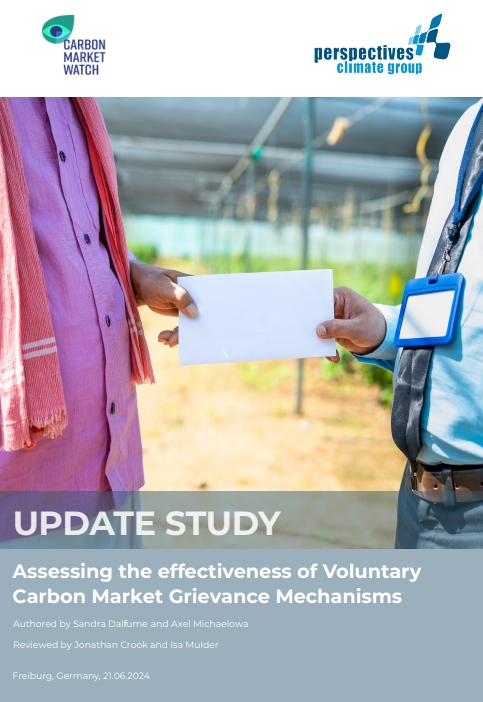
Assessing the effectiveness of Voluntary Carbon Market Grievance Mechanisms
- What are grievance mechanisms? - Why are grievance mechanisms needed in the carbon markets context? - How are grievance mechanisms from key VCM standards performing? Perspectives new study that assesses the grievance mechanisms of CAR, Verra, ACR and ART based on the recent developments to their grievance mechanism procedures. Our 2024 review found improvements in the CAR, Verra and ACR grievance processes as well as some relevant positive provisions in the ART mechanism. Most standards now feature detailed processes with clear phases and timeframes. However, our 2024 review highlights ongoing challenges. Most of the standards still need to improve the visibility and accessibility of the mechanisms, and some of the standards have conditions that might restrict access to their grievance processes. Additionally, all programms must work on ensuring the independence of the mechanism. As part of this study, we also delve into the first grievance lodged under ART’s complaint mechanism by the Amerindian Peoples’ Association (APA) in Guyana, a case that was dismissed due to formal reasons without addressing key substantive issues raised by APA. This case study starkly illustrates, among other aspects, the critical need for an effective grievance process from the outset of grievance submission.
PCG · Sandra Dalfiume & Axel Michaelowa
Developing CDR at scale and speed in Norway
Norway's physical geography, national and international climate policy, and social geography all play a role in the future potential of Carbon Dioxide Removal technology deployment in the country. This report evaluates suitability of both technological and nature-based CDR pathways in Norway and details the various geographical, social, and political aspects that could affect their deployment. This report was prepared by Carbon Limits AS and Perspectives Climate Research gGmbH for Carbon Gap.
Malte Winkler et al.
Enhancing Integrity: How to credibly bring REDD+ into international carbon markets under Article 6.2
The Warsaw Framework for REDD+ provides an important framework for international cooperation on forest conservation recognised in Article 5.2 of the Paris Agreement. However, while funding REDD+ through market-based approaches was potentially allowed, the WFR required additional criteria to be developed to ensure carbon markets’ environmental integrity. While Article 6.4 rules specify a detailed set of principles and criteria that activities need to satisfy before they can get registered, Article 6.2 only provides high-level integrity principles for cooperative approaches, with countries having the ultimate authority to operationalise these. Therefore, Perspectives suggests using PACM as a benchmark for REDD+ arrangements under Article 6.2, as it establishes stricter requirements than the different VCM programmes. This is a precondition for increasing trust in REDD+ credits. Permitting a direct link between Article 5.2 and Article 6.2 without extra requirements would be wholly inconsistent with the principles of Article 6 and should be avoided. Article published in Carbon Mechanisms Review "From Framework to Action: fostering high-integrity carbon markets after the Baku breakthrough", Spring 2025.
PCG · Sandra Dalfiume & Axel Michaelowa
Sida’s Climate Mitigation Finance: a Portfolio Evaluation
This working paper examines the climate mitigation finance portfolio of the Swedish International Development Agency (Sida), focusing on projects undertaken between 2017 and 2022. The authors analyse the projects’ features, such as their geographical location, sector, intervention type, and funding sources, to understand the portfolio’s composition and identify trends. The analysis reveals that Sida’s climate mitigation projects primarily focus on renewable energy and energy efficiency in least developed countries (LDCs) in Sub-Saharan Africa. The working paper also presents an ex-ante evaluation of the Sida’s climate mitigation finance portfolio. The analysis assesses the projects’ transformational potential, considering factors such as speed, scale, systemic change, relevance, and additionality, using a framework developed by the Climate Investment Funds.
PCR · Max Schmidt, Igor Shishlov & Luisa Weber
Concept note for a tool for the demonstration and assessment of additionality
This concept note was developed by a team of international carbon market methodology experts in the context of the “International Initiative for Development of Article 6 Methodology Tools”. The concept note lays out the objectives and key components of a tool that provides a robust approach and guidance for project proponents to demonstrate that their proposed mitigation activities can be considered additional in the context of Article 6 of the Paris Agreement.
PCR · Axel Michaelowa
Concept note for a tool on monitoring, reporting and verification of emissions and emission reductions for Article 6 activities
This concept note was developed by a team of international carbon market methodology experts in the context of the “International Initiative for Development of Article 6 Methodology Tools”. The concept note lays out key elements for a tool that provides for a general guidance on updates to the monitoring elements of CDM methodologies, as well as related reporting and verification elements, to ensure alignment with the Article 6.2 guidance; the rules of the Article 6.4 mechanism; and modalities of the enhanced transparency framework (ETF).
PCR · Axel Michaelowa & Aayushi Singh
Concept note for a tool on robust baseline setting
This concept note was developed by a team of international carbon market methodology experts in the context of the “International Initiative for Development of Article 6 Methodology Tools”. The concept note lays out the objectives and key components of a tool that provides for a stepwise approach to setting a crediting baseline for projects and programmatic approaches that is both in line with the Article 6.2 guidance and the rules of the Article 6.4 mechanism.
PCR · Axel Michaelowa & Juliana Keßler
Adapting CDM methodologies for use under Article 6 of the Paris Agreement
This study assesses whether existing international carbon market methodologies for determination of additionality and baselines and monitoring, particularly those from the Clean Development Mechanism (CDM), can be adjusted to transition to the Article 6.4 mechanism. CDM methodologies need to be modified to align with the more rigorous requirements of Article 6.4 of the Paris Agreement. Different options are discussed to operationalise the Article 6.4 methodology requirements. The Focus is on the option to develop overarching methodological tools that can be applied to make CDM methodologies “Article 6.4 proof”. This approach is beeing illustrated by applying it to two CDM methodologies, ACM0005 and ACM0006.
PCG · Axel Michaelowa, Juliana Keßler & Aayushi Singh
COP28 Digest: Relevance of key outcomes for carbon market implementation in Africa
As part of the Climate Finance Innovators project coordinated by Perspectives Climate Group, in close collaboration with Climate Focus, and supported by Germany’s International Climate Initiative, the "COP28 Digest" was launched in June 2024. The policy brief summarises key COP28 developments and analyses what key outcomes mean for the practical implementation of carbon markets, with a special focus on the relevance for African host countries. This includes a summary of the regulatory progress within the United Nations Framework Convention on Climate Change (UNFCCC) negotiations as well as the Article 6.4 Supervisory Body (A6.4SB), but also progress on the action agenda and implementation initiatives. These aspects will not be analysed from the perspective of a negotiator, but to what extent they are relevant for the practical implementation of carbon markets and provide an outlook on the way forward for the implementation of Article 6 in Africa.
PCG · Stephan Hoch et al.
Debt-for-Climate Swaps: a controversial tool to unlock climate change mitigation and adaptation in countries with high debt burden
This policy brief provides an in-depth analysis of Debt-for-Climate (DFC) swaps, focusing on restructuring sovereign debt to support climate change mitigation and adaptation measures in countries with high-debt burden. It expounds DFC swaps’ current limitations, including free-riding incentives, insufficient credit enhancement funding, and high transaction costs. By proposing pragmatic strategies to enhance DFC swap efficiency, such as streamlining processes and broadening creditor participation, the brief aims to inform policymakers, financial institutions, and private sector actors on optimizing D FC swap effectiveness. The publication, authored by Luisa Weber, Laila Darouich, Igor Shishlov and Axel Michaelowa, highlights how integration of DFC swaps into broader governance reforms is crucial for ensuring sustainable climate finance solutions and mitigating long-term debt risks.
PCG · Luisa Weber et al.
Explore the Outcomes of COP28 with Axel Michaelowa
Explore the outcomes of COP28 hosted by leading climate policy expert and Research Director at Perspectives Climate Research, Axel Michaelowa. What You'll Learn: Key outcomes and results of COP28 Basic implications for global climate policy Overview of strategic insights for various stakeholders Who Should Attend: Individuals new to climate policy Experts seeking a concise overview Students and educators General public with an interest in environmental issues
PCG · Axel Michaelowa
How can SACE progress towards alignment with the Paris Climate Agreement?
The publication sheds light on the critical role played by export credit agencies, like Italy’s SACE, in the energy sector. While being Europe’s biggest public financier of fossil fuels, in 2022 and 2023 SACE did not make any progress towards more alignment with the Paris Climate Agreement. SACE still holds a score of only 0.22/3.00 points (as assessed by Perspectives one year ago), while Italy (and thus SACE) has been found to be the biggest ‘promise breaker’ among Clean Energy Transition Partnership signatories. The policy brief, authored by Max Schmidt, Dario Brescia, Igor Shishlov and Yuliya Romanyuk, provides background, insights, and recommendations to reform SACE. It identifies key national and international factors and stakeholders that can be instrumental in supporting SACE’s alignment with the Paris Agreement.
PCG · Max Schmidt, Dario Brescia & Igor Shishlov
Lessons Learned from the Kyoto Mechanisms for the Article 6.4 Mechanism
The report summarizes key lessons learned from the Kyoto Protocol’s Clean Development Mechanism (CDM) and Joint Implementation (JI) for the new Article 6.4 mechanism of the Paris Agreement. The report first provides an overview of the issuance and use of carbon credits under these mechanisms. This is followed by an assessment of what elements of the existing mechanisms could be transferred to the Article 6.4 mechanism. We recommend that mitigation activities under the Article 6.4 should be considered ‘high-hanging fruits’, enhance ambition, have a high likelihood of additionality, provide co-benefits for other sustainable development targets, and ensure that emission reductions can be reasonably attributable to the mitigation activity.
PCG · Axel Michaelowa & Juliana Keßler
Research and innovation for climate neutrality by 2050 Challenges, opportunities and the path forward
Transforming Europe into a climate neutral economy and society by 2050 requires extraordinary efforts and the mobilisation of all sectors and economic actors, coupled with all the creative and brain power one can imagine. Each sector has to fundamentally rethink the way it operates to ensure it can be transformed towards this new net-zero paradigm, without jeopardising other environmental and societal objectives, both within the EU and globally. Given the scale of the transformation ahead, our ability to meet climate neutrality targets directly depends on our ability to innovate. In this context Research & Innovation programmes have a key role to play and it is crucial to ensure they are fit for purpose and well equipped to support the next wave of breakthrough innovations that will be required to achieve climate neutrality in the EU and globally by 2050. The objective of this study is to contribute to these strategic planning discussions by not only identifying high-risk and high-impact climate mitigation solutions, but most importantly look beyond individual solutions and consider how systemic interactions of climate change mitigation approaches can be integrated in the development of R&I agendas.
PCG · Malte Winkler & Matthias Honegger
The Landscape of Article 6 Implementation
This report provides the most complete and up-to-date overview of the progress made on global Article 6 implementation on a practical level and is the fourth edition of a series of similar studies. The study also reviews the status of Article 6 rules from an implementation perspective, followed by a deep dive on host country frameworks that looks at the level of preparedness of 51 countries to participate in Article 6 cooperation. Finally, the report summaries key facts and figures and offers fact sheets on all relevant Article 6 implementation initiatives. Key take aways from the report includes: The implementation of Article 6 carbon market activities is progressing but has only been slowly moving beyond piloting. The unfinished business of crafting international and domestic carbon market rules, as well as operationalising the Article 6.4 mechanism is a key limiting factor. Countries are taking different approaches to managing the interface between Article 6 and the VCM, but it is encouraging that many developing countries have begun to work on establishing national frameworks for Article 6 participation requirements. Whether carbon market implementation at scale materialises, depends not only on ITMO supply but also on more ambitious demand signals from buyers. Read the full report The Landscape of Article 6 Implementation .
PCG · Stephan Hoch, Peris Waweru & Axel MichaelowaRatcheting up effectiveness to improve the Global Stocktake process
The Paris Agreement rests on voluntary emissions-reduction pledges but does not mandate that they reflect each country's highest possible ambition. This One Earth perspective examines how the Global Stocktake process can be made more effective at ratcheting up collective ambition and strengthening implementation of the Paris Agreement.
PCR · Igor Shishlov
Eastern Africa Carbon Market Profile
The Climate Finance Innovators (CFI) project developed the 2nd edition of the Eastern Africa carbon markets portfolio for the Eastern Africa Alliance of Carbon Markets and Climate Finance . These documents provide an up-to-date overview of the achievements of Eastern African countries in the most relevant carbon crediting standards, compiling recent data on carbon market activities and carbon credit issuances. Covering the seven members of the Alliance (Burundi, Ethiopia, Kenya, Rwanda, Sudan, Tanzania, and Uganda), this portfolio focuses on the main highlights of each member country’s carbon market profile and summarizes key findings in a regional profile. This overview finds that Eastern Africa has managed to mobilize more than 500 carbon market activities that have already issued more than 100 million carbon credits across the Clean Development Mechanism (CDM) and voluntary carbon market (VCM) standards. Eastern Africa is thus well-placed to mobilize benefits from the carbon markets for delivering on their NDC targets. These profiles are also crucial as a basis for making decisions on CDM transition and Article 6 readiness and implementation.
PCG · Peris Waweru & Stephan Hoch
Unlocking the Caribbean’s Climate Potential: Prospects of a Caribbean Alliance on Carbon Markets and Climate Finance
This brief focuses on the potential of carbon markets, including Article 6, as instruments to achieve Eastern Caribbean States’ (ECS) NDCs and their transition towards a low-carbon economy. The report also explores the benefits of Article 6 and VCM, and the possibility to leverage them by establishing a Caribbean Alliance on Carbon Markets and Climate Finance, following the example of similar initiatives in Africa.
PCG · Stephan Hoch & Peris Waweru
The Rationale for Methodological Choices in the II-AMT Tools
A background document of the International Initiative for Development of Article 6 Methodology Tools (II-AMT) that explains the reasoning behind the key methodological choices in the Article 6 methodology tools and the NDC guidance document, complementing the tools by documenting the discussion behind their approaches.
PCR · Axel Michaelowa, Juliana Keßler & Chandan Kumar Sah
Development of Article 6 Methodology Tools (II-AMT Chapeau Document)
The chapeau document of the International Initiative for Development of Article 6 Methodology Tools (II-AMT) sets out the scope, structure and development process of the suite of tools that guide the revision of carbon-market methodologies for mitigation activities under Article 6 of the Paris Agreement, covering additionality determination, baseline setting and MRV.
PCR · Axel Michaelowa, Juliana Keßler & Chandan Kumar Sah
GUIDE01: Guidance for evaluating mitigation activities' links to the host country NDC and LT-LEDS
An II-AMT guidance document for evaluating how mitigation activities implemented under Article 6 of the Paris Agreement link to the host country's Nationally Determined Contribution (NDC) and long-term low-emission development strategy (LT-LEDS).
PCR · Axel Michaelowa, Juliana Keßler & Chandan Kumar Sah
Governing landscapes: An agenda for the assessment of grasslands and savannahs
This Frontiers' article proposes developing an integrated assessment toolkit for environmental governance in overlooked grasslands and savannahs in the Global South. Systems-thinking approaches offer frameworks and methodologies to explore the complexity of social-ecological systems, unveiling institutional aspects and causal variables in resource management. Reliance on a single framework limits comprehensive understanding, highlighting the need for more social science knowledge and context-specific frameworks for policy settings. Building on community-based governance (CBG) and key frameworks like community-based natural resource management (CBNRM) and the institutional analysis and development framework (IAD), the article proposes a theory-based toolkit. This toolkit reviews, synthesizes, and tests core principles to better account for social-ecological interactions. Future research can generate testable hypotheses in real-life contexts, guided by suggested research questions, methods, and comparable cases.
PCG · Ingrid Wawrzynowicz
COP27 digest: Moving towards the operationalisation of Article 6-backed carbon markets in Africa
This short study reflects on COP27 outcomes, both on the technical negotiations on Article 6 and CDM transition, as well as action-oriented initiatives through the lens of African priorities. Finally, the study discusses remaining work for the operationalisation of carbon market mechanisms under the Paris Agreement in light of African priorities, as well as practical developments in carbon markets in Africa.
PCG · Stephan Hoch
Alignment of the United States Export-Import Bank (US EXIM) with the US climate and development policy objectives
This study and its corresponding policy brief assess the alignment of United States Export-Import Bank (EXIM), the official export credit agency (ECA) of the US, with the country’s climate and development policy objectives derived from relevant Executive Orders (EOs), acts, guidance, and strategic policy documents. ECAs are government- backed financial institutions that typically promote trade abroad and support the competitiveness of national companies overseas. As public finance institutions, they bear the political mandates and international commitments of their respective governments, including those under international treaties such as the Paris Agreement and the United Nations (UN) Sustainable Development Agenda. This study examines EXIM against the framework of policy coherence for sustainable development that promotes the principle of a whole-of-government coordination. The methodology for this study includes desk-based research and interviews to further corroborate key findings. Interviewees included representatives from EXIM, the US Treasury, and the US Congress, as well as civil society actors such as Friends of the Earth US and the Sierra Club. The report is further complemented by information collected during the US EXIM Bank 2022 Annual Conference. The corresponding policy brief explores the role of EXIM for US climate and development policy and proposes recommendations for the reform of EXIM to ensure its alignment with these US policy objectives. Previously, Perspectives Climate Research has developed a tailor-made methodology to assess and compare ECAs and their governments regarding alignment with the Paris Agreement and applied it to major G20 country ECAs including US EXIM. The detailed assessment of US EXIM is available here .
PCG · Sherri Ombuya, Max Schmidt & Igor Shishlov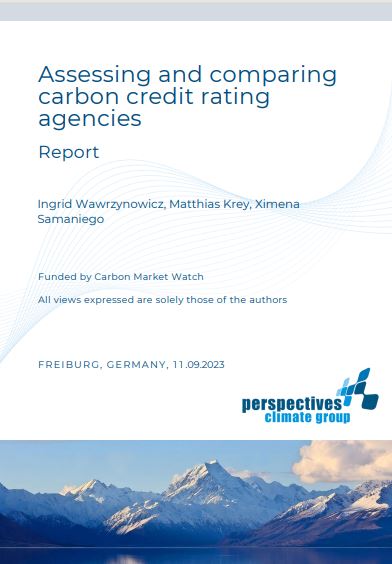
Assessing and comparing carbon credit rating agencies
The lack of a universally accepted and in-depth definition of carbon credit quality is a fundamental issue for the carbon market, as market actors increasingly treat carbon credits with caution. Carbon credit rating agencies aim to address this lack of standardisation by distinguishing between robust carbon credits and those not delivering on their promises. The agencies claim to increase transparency, mitigate reputational risk and enable fair pricing. In our latest report, developed in collaboration with our friends at CMW, we dive into the approaches of four carbon credit rating agencies to discover key similarities and differences. Based on this, we provide recommendations on the way forward to more transparency and integrity for carbon credit ratings. Read the full report here .
PCG · Ingrid Wawrzynowicz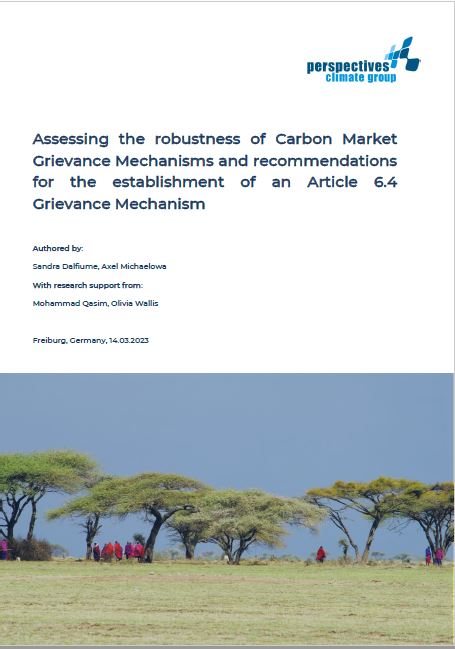
Assessing the robustness of Carbon Market Grievance Mechanisms and recommendations for the establishment of an Article 6.4 Grievance Mechanism
Perspectives Climate Research latest report, commissioned by Carbon Market Watch, assesses the robustness of Carbon Market Grievance Mechanisms and provides recommendations for the establishment of an Article 6.4 Grievance Mechanism. Carbon markets grievance mechanisms can operate as early warning systems to avoid the escalation of concerns into more serious disputes and human right abuses. Our study showcases that current voluntary carbon market standards have ineffective grievance mechanisms, with Gold Standard grievance mechanism being the current frontrunner among voluntary carbon market standards. In addition to map out best carbon market grievance mechanisms practices, our study provides detailed recommendations for the design of the Article 6.4 grievance mechanism. Read the full assessment of carbon market grievance mechanisms.
PCG · Sandra Dalfiume & Axel Michaelowa
Assessment of Emission Rights of Green PtX Products
The import and domestic use of green hydrogen and Power-to-X products (PtX) in Germany and the European Union (EU) encounters a complex regulatory landscape in flux. At the EU level, the most relevant policy instruments are the EU Emissions Trading System (EU ETS), the Renewable Energy Directive (RED), and the newly introduced Carbon Border Adjustment Mechanism (CBAM). Both, the EU ETS and the CBAM directly target industry. RED primarily targets EU Member States but defines fundamental requirements regarding the “green” character of PtX that can also be transposed to industry players. In the German context, the national ETS (nETS) provides a regulative framework for PtX use in transport and the heating/building sector as well as smaller businesses not covered by the EU ETS. This study analyses the implications of this complex ruleset on the competitiveness of green hydrogen/PtX; differentiating between hydrogen use and production both for imported and domestically produced hydrogen to the extent possible. It also highlights upcoming changes to the policy framework and discusses their impact.
PCG · Sonja Butzengeiger
Assessment of national capacity and opportunities for Article 6 related international carbon trading in Burkina Faso’s energy, industrial and waste sectors
Perspectives’ team analyzed the readiness of the Burkinabe government to engage in Article 6, the readiness of the private sector to design and implement mitigation activities and opportunities and challenges for activity developers to access upfront finance. For this, the authors conducted interviews with key stakeholders in Burkina Faso and validated the conclusions and recommendations in a stakeholder workshop. The key recommendations to improve Burkina Faso’s access international carbon markets under Article 6 of the Paris Agreement include: Strengthening the institutional framework, including a coordinated support to the national carbon market focal point Improving access to upfront finance Strengthening access to information, awareness raising and communication Strengthening technical capacities at the sectoral level Building on existing strengths developed under the CDM and regional exchange while identifying new opportunities through innovative activities with high sustainable development benefits.
PCG · Kaja Weldner & Stephan Hoch
CARBON BORDER ADJUSTMENT MECHANISM IMPACT ASSESSMENT REPORT FOR VIETNAM
The EU’s Carbon Border Adjustment Mechanism (CBAM) is evolving rapidly, with many uncertainties remaining regarding its long-term scope, embedded emissions calculation, and reactions of EU-trade partners. In its current form, the CBAM can affect Vietnamese enterprises exporting to EU although its direct impacts on Vietnam’s GDP are unlikely significant. If the CBAM is expanded to other tradeintensive sectors of Vietnam or taken up by other key trading partners of Vietnam, the impacts may grow quickly. Therefore, Vietnam should engage proactively with the CBAM and prepare for mitigation of potential impacts. One of the pro-active approaches is to accelerate and deepen the adoption of carbon pricing. This will facilitate energy transition, support achievement of Vietnam’s climate change mitigation target (NDC) under the Paris Agreement and long-term net-zero targets and would allow to harness co-benefits. It is also advisable for Vietnam to engage in constructive dialogues with the EU in order to negotiate a fair implementation of CBAM that takes into account Vietnam’s efforts. A key demand here should be the use of emissions credits instead of having to buy CBAM certificates.
PCG · Axel Michaelowa
COP28 Unpacked: Assessing Outcomes and Shaping the Climate Policy Agenda
This research paper is part of a 12-month series published by the Al-Attiyah Foundation every year. The December 2023 edition explores the outcomes of COP28 and the progress made in the key negotiating strands. It also looks at the significance of the conference for the MENA region and draws conclusions for the way forward.
PCG · Laila Darouich et al.
Debt-for-Climate swaps as a tool to tackle climate and debt crises: opportunities and challenges
Insufficient and loan-based climate finance adds to debt burden in developing countries, hindering public investment in climate action. Debt-for-Climate (DFC) swaps promise to tackle both issues, but their potential remains unexplored. This research report examines the international experience with DFC swaps and discuss its opportunities and challenges. Additionally, the report showcases the unique opportunity DFC swaps present to alleviate debt strain while bolstering climate financing. The report dives into the key factors that drive successful DFC implementation, exploring the benefits and challenges faced by both debtors and creditors. Finally, it emphasizes strategies to enhance the impact of DFC swaps, paving the way for a more sustainable and equitable future.
PCG · Laila Darouich et al.
Decarbonization of the transport sector through dissemination of electric motorbikes: a guide for e-mobility stakeholders to carbon credits generation
The report aims at assessing viable options for registering ad generating carbon credits from the dissemination of electric motorbikes. While the methodologically the approach is the same for e-motorbikes, e-cars, e-buses, certain elements (e.g. baseline identification, additionality demonstration, estimation of the mitigation potential) can vary from one technology to another. The following sections will provide information on the main design elements of a mitigation activity, as well as on the carbon crediting process cycles under Gold Standard and the Verified Carbon Standard, including timeline and costs. It then compares methodologies that are relevant for the e-mobility sector (Section 3) while Section 4 discusses the interactions between the voluntary carbon markets and Article 6 of the Paris Agreement. The goal is to provide a comprehensive description yet accessible also to non-expert readers of the carbon market requirements, associated costs and time, as well as potential challenges that can jeopardize carbon credit issuance.
PCG · Perspectives Climate Group
Financing of PtX Projects in Non-OECD Countries
This Report summarizes the findings of different Work Packages elaborated by Frankfurt School of Finance & Management, jointly with Perspectives and Planet Power Finance during the last quarter of 2022, as part of the assignment commissioned by H2Global Stiftung (Foundation). The purpose of the H2Global Stiftung is to promote the protection of the environment and the climate as well as the promotion of science and research. The purposes will be achieved by measures that serve to promote the production and use of Green Hydrogen and other climate-neutral energy carriers (climate-neutral or defossilised energy carriers) at national and international level. In this context, H2Global Stiftung is also in charge of implementing the H2Global instrument to promote PtX technology and market ramp-up through an auction scheme for green hydrogen imports. Interviews were held with investors, financial institutions, and other relevant stakeholders. All opinions expressed in this document are those of the authors. This study was prepared by Frankfurt School on behalf of the H2Global Foundation in cooperation with Gesellschaft für international Zusammenarbeit (GIZ). It was financed by the Federal Ministry for Economic Cooperation and Development (BMZ).
PCG · Sonja Butzengeiger
Interlinkages of registries and implications for functions and structures in the context of Article 6
To understand how and how much carbon credits contribute to global mitigation efforts, it is crucial to keep track of their issuance, transfer, and use. This is done by carbon credit registries . The discussion paper identifies the different types of carbon credit registries in the international carbon market infrastructure under Article 6 and the voluntary carbon market and explores the possible ways in which these registries can connect and interact with each other.
PCG · Axel Michaelowa et al.
International Climate Finance from a Global Perspective
The Paris Agreement reaffirmed the commitment to provide USD 100 billion in international climate finance to developing countries by 2020. This Working Paper delves into the history and challenges of international climate finance. The complexities tied to diverse definitions and accounting practices, have led to disputes over climate finance figures, as well as the struggle of developed countries to meet the USD 100 billion annual target. With the need to mobilize finance for addressing loss and damage (L&D) gaining traction in UN climate negotiations, the paper examines how similar challenges may hinder progress on the L&D agenda. Thus, fostering trust between donor and recipient countries in the context of financial support pledges under the Paris Agreement is crucial to overcome these challenges. Published before COP 28, the paper identifies how key negotiation processes, like the New Collective Quantified Goal on Climate Finance (NCGG), have the potential to change the status quo.
PCG · Sherri Ombuya, Igor Shishlov & Axel Michaelowa
L&D Pilot Funding Arrangements - Tools to respond to non-economic loss and damage
Non-economic loss and damage (NELD) refers to the broad range of losses and damages induced by climate change impacts that cannot be measured in monetary terms, in contrast to economic loss and damage for which monetary valuation is possible (e.g. infrastructure, assets, and income). NELD and economic loss and damage are intertwined, but, thus far, humanitarian, development, and adaptation practitioners have largely focused on saving lives and economic recovery, through reconstruction and rehabilitation. NELD are likely to bear more importance than economic loss and damage for households and communities in developing countries. Recognizing and managing the risk of NELD should, therefore, be a central part of loss and damage recovery interventions given their impact on human welfare.
PCG · Max Schmidt & Sherri Ombuya
Loss and Damage Finance: An assessment of the most promising instruments
Without adequate international climate finance, countries are forced to find resources for adaptation, mitigation and addressing Losses and Damages (L&D) from climate change elsewhere, including taking on more sovereign debt. The L&D finance gap is estimated at hundreds of USD billion per year, and the debt burden of developing countries undermines their responses to address escalating climate impacts. Despite that, discussions about finance for L&D have been overwhelmingly detached from discussions about debt burden and potential solutions such as Debt-for-Climate (DFC) swaps. This research report discusses and assesses various instruments to raise finance for addressing climate change-related L&D. The report reviews ten of the most promising financial instruments based on existing literature and showcases their potential to raise finance for L&D based on four criteria enshrined in the principles of the UNFCCC and the Paris Agreement: adequacy, predictability, feasibility and fairness. Further, 31 L&D experts from across the world completed a survey on these instruments based on the four criteria, complementing the desk research. Overall, we find that only a combination of financial instruments will be able to fill the L&D finance gap and respond to the wide range of actions that encompass addressing L&D . Implementing such a ‘winning combination’ can be facilitated by a reform of the multilateral system of public development finance. In the meantime, countries should pursue immediately realisable options to raise L&D finance while preparing for later adjustments and upscaling. Continuous emphasis should be made on sourcing L&D finance based on the principle of equity, the ‘polluter pays’ principle and the UNFCCC principle of Common but Differentiated Responsibilities and Respective Capabilities . To learn more about our key findings, read the full publication.
PCG · Max Schmidt et al.
Mission Impossible: Harvested Wood Products under Article 6
Harvested wood products (HWP), a term for various forms of woody biomass that are the result of forestry activities that has been coined in the context of national-level accounting in greenhouse gas inventories, are seen by some as important opportunity for climate change mitigation. However, their consideration under the Paris Agreement’s Article 6 is not straight-forward as discussed in this article.
PCG · Matthias Honegger & Axel Michaelowa
Paris Alignment of Export Credit Agencies: France (Bpifrance Assurance Export)
Perspectives Climate Research again utilized their own methodology to assess and compare Bpifrance the official French Export Credit Agency (ECA), for its alignment with the Paris Agreement. Overall, Bpifrance was rated with ‘Some progress’ and therefore needs to speed up the progress towards aligning its activities with the Paris Agreement (assessment score 1.07/3.00). For years, France has played a key role in advancing reforms of the international export finance system, but progress beyond the coal sector is urgently needed. Bpifrance is among the ten European member countries of the Export Finance for Future (E3F) initiative that the Government of France co-launched in 2021, but at the same time exhibits a large volume of support for fossil fuel value chains when compared to other E3F members (EUR 1.62 billion, 2015-2021). This compares to about EUR 1.96 billion for renewable energy and related infrastructure (45% of Bpifrance’s energy portfolio). However, since 2020 almost all energy finance was committed to renewable energies and related infrastructure. The study explores the main reasons for the score given such as remaining loopholes for Bpifrance to keep supporting oil and gas projects under specific circumstances, particularly oil and gas-fired power plants. The ECA potentially underreports greenhouse gas emissions in other carbon-intensive sectors such as aviation, shipbuilding and military and does not report project-level emissions data in a transparent and granular way. Bpifrance still has to disclose evidence for the effectiveness of its ‘climate bonus’ which offers preferential conditions for sustainable projects in line with the European Taxonomy and close the loophole to support nuclear and gas projects via the climate bonus.
PCG · Max Schmidt, Igor Shishlov & Philipp Censkowsky
Paris Alignment of Export Credit Agencies: Italy (SACE)
Perspectives Climate Research again utilized their own methodology to assess and compare SACE the official Italian Export Credit Agency (ECA), for its alignment with the Paris Agreement. Overall, SACE was rated ‘Unaligned’ and therefore urgently needs to speed up the progress towards aligning its activities with the Paris Agreement (assessment score 0.22/3.00). The study explores the main reasons for this score such as the lack of fossil fuel exclusion policies in line with the 1.5° C objective of the Paris Agreement, SACE´s portfolio showing a significant exposure to the oil and gas sectors, and SACE exhibiting the largest volumes of annual support for fossil fuel value chains when compared to other E3F members (EUR 8.4 billion, 2015-2020). Furthermore, the study found that SACE currently reports operational greenhouse gas (GHG) emissions (Scope 1 and 2) as well as business travel emissions. However, no reporting on financed emissions is provided (Scope 3) which likely represent the largest emissions category.
PCG · Dario Brescia et al.
Paris Alignment of Export Credit Agencies: South Korea (The Korea Trade Insurance Corporation (K-Sure) and the Export-Import Bank of Korea)
Perspectives Climate Research again utilized their own methodology to assess the Korea Trade Insurance Corporation (K-Sure) and the Export-Import Bank of Korea (KEXIM) - the official Export Credit Agencies (ECAs) of South Korea, for their alignment with the Paris Agreement. Overall, K-Sure and KEXIM were rated with ‘Unaligned’ and therefore urgently need to speed up the progress towards aligning their activities with the Paris Agreement (assessment score 0.27/3.00 for both ECAs). The study explores the main reasons for the score given such as significant support of fossil fuel activities (mostly oil and gas) overseas through its ECAs compared to other G20 countries and continued support to fossil fuel investments, which is incompatible with the objectives of the Paris Agreement and should therefore be urgently ceased following the examples of such countries as France and the UK. Climate finance, such as the support for renewable energy, is negligible in both ECAs’ portfolios and must be ramped up to ensure that they contribute to the ecological transition rather than slow it down. Introducing effective incentive mechanisms and price discrimination tools across the portfolio can help steer Korean exporters from carbon-intensive to climate-friendly activities. At the international level, South Korea is not a signatory of the Glasgow Statement on international public support for the clean energy transition and did not make commitments to phase out support to fossil fuels except for coal. Moreover, according to the information available, Korean ECAs do not appear to be working to any significant extent with national exporters to transform fossil fuel-related value chains, incentivise low GHG emissions exports and ultimately achieve Paris Alignment.
PCG · Laila Darouich et al.
Raising climate ambition with carbon credits
This discussion paper explores the role and interplay of the voluntary carbon market (VCM) and market-based cooperation under Article 6 of the Paris Agreement, focusing on how carbon credits can support the implementation of national climate targets and raise ambition beyond these targets. It covers ensuring the integrity of carbon credits, their potential authorisation under Article 6, and the high-integrity use of carbon credits and related accounting and claims, using Sweden as a case study to illustrate key issues. The study concludes that carbon credits can be a valuable tool for mobilising public and private finance for additional emission reductions and removals (mitigation outcomes), if their integrity and robust accounting are ensured, and their use complements ambitious climate action.
PCG · Hanna-Mari Ahonen, Juliana Keßler & Aayushi Singh
Supporting authorizations under Article 6 of the Paris Agreement
Article 6 of the Paris Agreement enables countries to participate in market-based cooperation , and to authorize public and private entities to engage in such cooperation, towards achievement of the Paris Agreement’s goals. The Article 6.2 guidance enables cooperation involving internationally transferred mitigation outcomes (ITMOs), which are mitigation outcomes authorized by the host country for use towards (another country’s) Nationally Determined Contributions (NDCs), international mitigation or other purposes. The Article 6.4 Mechanism can be used to certify mitigation outcomes (emission reductions and removals) that meet international criteria as Article 6.4 Emission Reductions. Authorization is a key step in enabling market-based cooperation under the Paris Agreement. Authorization commits the participating Parties to ensure environmental integrity, promote sustainable development, and apply robust accounting. For a host country, authorizing the use of ITMOs triggers an obligation to apply corresponding adjustments to its emissions balance, meaning that authorized mitigation outcomes are not counted towards its NDC. To date, there has been a limited practical experience in the authorization process. Under the Gold Standard’s Article 6 Early Movers Programme, Perspectives Climate Group GmbH, and Atlas Environmental Law Advisory have supported activity developers in the process of preparing for authorizations under Article 6.2. This project included identifying and engaging with specific case studies, provision of technical support and sharing knowledge of the practical application of the Article 6.2 guidance on authorization. The case studies selected for this support were a cookstove activity in Rwanda, a household biogas activity in Nepal, and a cookstove activity in Ghana. The support was mainly directed at the activity developers, but also included support to Article 6 focal points of the government in the three host countries.
PCG · Marc André Marr & Hanna-Mari Ahonen
The Importance of Regional Cooperation for Climate Change Adaptation and Building Resilience
The Al Attiyah October 23 paper discusses the relevance of regional cooperation for tackling climate change impacts in the Middle East and North Africa (MENA) region. The paper presents the different climate hazards (e.g. droughts, rising sea levels and extreme weather events) and corresponding impacts affecting the region. It highlights the fact that despite the growing challenges, regional collaborative efforts remain limited, particularly for tackling slow onset events like aridification. Through different case studies on successful regional cooperations (the Islamic Development Bank, the West African Climate Alliance on Carbon Markets and Climate Finance, and the Sahara and Sahel Observatory), the paper describes how regional collaborations can strengthen the work on climate change adaptation and resilience through finance mobilization, knowledge and technology exchange, policy/strategies harmonisation, and increasing the region's influence in international discussions. It argues for the importance of regional cooperation for l everaging the collective strengths, knowledge, and values of different stakeholders , which are particularly relevant for addressing slow onset events like aridification.
PCG · Marjorie Ménard & Axel Michaelowa
The structures of the emerging international hydrogen trade and their geopolitical implications
This study intends to contribute to a better understanding of the possible structures of future international hydrogen trade. The aim is to identify and present the most likely scenarios of the design of the future global and regional hydrogen markets up to 2050 to enable market participants, regulators, and policymakers to assess the effects of different policy options on energy security, geopolitical implications, and sustainability.
PCG · Sonja Butzengeiger & Axel Michaelowa
Toward the effective and fair funding of CO2 removal technologies
Carbon dioxide removal technologies are gaining prominence in academia, industry and policy, yet the need for substantial funding raises serious challenges. In this comment Matthias Honegger outlines these issues and charts a path for the effective, systematic and fair mobilization of funds for removals through the declaration of a coalition that commits to carbon management at COP28 this year.
PCG · Matthias Honegger
TOWARDS CLOSING A DEAL ON FINANCE FOR LOSS AND DAMAGE (L&D): MOBILISING INNOVATIVE SOURCES
In the run up to COP28 discussions, the policy brief addresses the pressing need for mobilizing finance to address Loss and Damage (L&D) caused by escalating climate change impacts. It highlights the existing financial gap, estimated between USD 290 billion annually by 2030 and USD 1 trillion annually by 2050. While ramping up traditional climate finance remains crucial, the widening L&D finance gap underscores the need for innovative sources of funding given the burgeoning needs of climate vulnerable developing countries. By discussing potential innovative financial instruments, governance principles, and pathways for mobilizing these resources, the brief aims to guide policymakers towards effective strategies and collaborative efforts needed to close the L&D finance gap.
PCG · Sherri Ombuya et al.
Urban market approaches under Article 6 of the Paris Agreement: Recommendations for practical implementation
The Perspectives Climate Research's publication titled "Urban market approaches under Article 6 of the Paris Agreement Recommendations for practical implementation" offers a comprehensive analysis of the potential of Article 6 of the Paris Agreement in the urban context, with a particular focus on Addis Ababa (Ethiopia) and Kampala (Uganda). The report presents a meticulous analysis of the emissions profiles of both cities and identifies the existing and planned urban activities that have the potential for effective use under Article 6. A key output is the identification of Art. 6 pilots in the cities. The most promising candidates identified are e-mobility both in Addis (electric taxis) and Kampala (electric bus rapid transport system) and electrification of cooking in Kampala. Clean cooling in hospitals was another option analysed for Addis. The report provides a valuable framework for the practical implementation of urban market approaches that can help these cities meet their emissions reduction targets.
PCG · Sonja Butzengeiger
What Will the Second UNFCCC COP in the GulfRegion Deliver?
The Al Attiyah November 23 paper examines the pivotal role of the Conferences of the Parties (COPs) under the United Nations Framework Convention on Climate Change in addressing anthropogenic climate change since 1995. It analyzes the evolution of COPs into major global events that enhance cooperation and introduce innovative solutions. Focusing on COP28 in Dubai, UAE, the paper evaluates key anticipated outcomes, including the finalization of the first Global Stocktake (GST), operationalization of the Loss and Damage (L&D) fund, progress on the Global Goal on Adaptation (GGA), and the new collective quantitative goal (NCQG) on climate finance. The paper further assesses the ambitious agenda of the UAE COP Presidency, which emphasizes renewable energy expansion, a circular carbon economy, and international climate finance, particularly engaging African countries in carbon markets. Additionally, it contextualizes COP28 against current global challenges such as extreme weather events, geopolitical tensions, and economic instability, considering their impact on the conference's potential to drive further climate action.
PCG · Perspectives Climate GroupTowards net zero: making baselines for international carbon markets dynamic by applying ambition coefficients
PCR · Axel MichaelowaDefinitions and accounting of climate finance: between divergence and constructive ambiguity
Published in Climate Policy, this article examines the divergent definitions and accounting practices used for climate finance, arguing that a degree of 'constructive ambiguity' has both enabled political agreement and created challenges for transparency and comparability in tracking climate finance flows.
PCR · Igor Shishlov & Philipp Censkowsky
Governance of Fragmented Compliance and Voluntary Carbon Markets Under the Paris Agreement
The current carbon market landscape comprises multiple market segments, embodying two decades of parallel efforts by various public and private actors. This resulted in fragmentation and complexity and undermined trust in the integrity of carbon markets. This fragmentation was triggered by a loss in faith in Kyoto mechanisms after the failure to establish a robust international climate policy regime in 2009. However, this diversity also contributed to the carbon markets’ versatility and resilience to changes in political and economic circumstances, enabling them to evolve to cater to various purposes. A new research article by Perspectives traces the parallel development of compliance and voluntary carbon markets, identifies areas of fragmentation and convergence in the governance of carbon markets, and discusses the paradigm shift brought about by the Paris Agreement. We discuss emerging features of international carbon market governance in the public and private domain, including political and technical issues. Fragmented governance is characterized by different degrees of transparency, centralization, and scales. We assess the crunch issues in the Article 6 negotiations through the lens of these governance features and their effectiveness, focusing on governance principles and their operationalization to ensure environmental integrity and avoid double counting. We conclude that, to maintain their relevance and integrity in the era of the PA, carbon markets need to continue to align with the global mitigation goals.
PCG · Hanna-Mari Ahonen et al.
Blueprint for Article 6 Readiness in member countries of the West African Alliance
As technical partners of the West African Alliance on Carbon Markets and Climate Finance, Perspectives Climate Group together with Climate Focus has developed an Article 6 Readiness support Blueprint with support from the Alliance Secretariat and the coordinator. It explains the requirements of the UNFCCC Article 6 rulebook in an implementation-oriented manner along with four Article 6 readiness building blocks: NDC alignment, Article 6 policy, institutional framework, and reporting/tracking. The Blueprint will support member countries in mapping stakeholders, understanding and addressing capacity and technical needs for the development of an Article 6 strategy. Using the Blueprint as capacity resource, countries’ can plan and adapt their Article 6 groundworks to national contexts and priorities.
PCG · Kaja Weldner et al.
Built on experience - transforming existing carbon market methodologies for Article 6 market-based cooperation
In this edition of the Carbon mechanisms review, Perspectives reflects on the outcomes of the concept phase of the international initiative for development of Article 6 methodology tools.
PCG · Axel Michaelowa et al.
Capacity building for Article 6 cooperation: The way forward
Perspectives Climate Research has developed a new discussion paper with the objective to outline lessons learned from capacity building efforts in the context of the Kyoto Protocol’s market mechanisms, especially the Clean Development Mechanism (CDM), to conceptualise capacity building and to discuss the challenges and success factors of capacity building, in particular of capacity building support provided to developing countries, through North-South, South-South, and peer-to-peer approaches. Based on this discussion, recommendations are derived on how to maximise the effectiveness, scale, and coordination of ongoing capacity building efforts to achieve Article 6 readiness. The discussion paper includes insights from speakers and participants present at the workshop on the coordination of Article 6 capacity building, conducted in the context of the Carbon Market Mechanisms Working Group (CMM-WG) on 21 March 2022.
PCG · Hanna-Mari Ahonen et al.
Carbon Mechanisms Review: Towards Readiness - Supporting Article 6 integration in NDCs and NDC implementation plans
Understanding the interlinkages between Article 6 cooperation and host country NDC implementation is crucial for ensuring that Article 6 cooperation contributes to, and does not undermine, the implementation of NDCs or the long-term goals of the PA. National Article 6 strategies and criteria should be developed in parallel with NDC implementation planning. This article aims to shed light on these issues, based on conceptual work and practical experience.
PCG · Hanna-Mari Ahonen & Aayushi Singh
Concept note for developing guidance for contributions of Article 6 activities to host country NDCs
This concept note was developed by a team of international carbon market methodology experts in the context of the “International Initiative for Development of Article 6 Methodology Tools”. The concept note describes methodological steps to be developed to ensure activities authorized under Article 6 of the Paris Agreement contribute to host countries´ NDCs and, if submitted, LT-LEDS. The concept notes lays out how guidance can be developed to support host country institutions’ decision making on activity authorization.
PCG · Axel Michaelowa & Malte Winkler
COP26 DIGEST: The Significance of Article 6 and CDM Transition Outcomes for Africa
The finalisation of the Paris Agreement Rulebook finally delivered the long-awaited compromise on the rules for carbon markets under Article 6 of the PA, which defines the rules for voluntary cooperation between Parties in the implementation of their nationally determined contributions (NDCs). Perspectives' experts have developed a policy brief for Climate Finance Innovators reflecting on the significance of COP26 outcomes for global carbon markets with a focus on African priorities. This includes carbon market cooperation under Article 6 of the PA as well as the transition of the Clean Development Mechanism (CDM) of the Kyoto Protocol (KP) to the Article 6.4 mechanism. This short study reflects on the significance of COP26 outcomes for global carbon markets with a focus on African priorities. This includes carbon market cooperation under Article 6 of the PA but also the transition of the Clean Development Mechanism (CDM) of the Kyoto Protocol (KP) to the Article 6.4 mechanism.
PCG · Stephan Hoch & Aayushi Singh
COP26 KEY OUTCOMES
A new report by ECBI assesses the outcomes of the Glasgow Climate Summit on the level of political ambition it achieved and what it delivered on finance, loss and damage, transparency, common time frames, Article6, and adaptation. The document explains and evaluates key formal COP and CMA decisions and the pledges and promises by various coalitions on issues ranging from coal to cars methane to forests. The report is authored by experts with many years of experience following the UNFCCC negotiations and features quotes and insights from ecbi’s network of negotiators and delegates who attended COP26. Read about the most important outcomes of COP26 here .
PCG · Axel Michaelowa
Developing an Article 6 tool to assess the additionality of mitigation activities
As countries move towards implementing Article 6 following the adoption of the Article 6 rulebook, focus must now turn towards transforming existing CDM market-based methodologies to align them with the rules and requirements of Article 6 of the Paris Agreement. The latest discussion paper by the CMM-WG reflects on the efforts of the International Initiative for development of Article 6 Methodology Tools (II-AMT), which is developing tools for accelerating this methodological transition. The paper critically analyses the additionality tool being developed under this initiative and provides recommendations for the tool developers to be considered in the II-AMT development phase that started in May 2022. Read the full discussion paper here .
PCG · Axel Michaelowa, Juliana Keßler & Aayushi Singh
Developing an Article 6 tool to set a robust crediting baseline
The paper discusses the development of an Article 6 baseline tool that can be added to existing CDM methodologies, so that these comply with Article 6 requirements. First, the paper reflects on baseline setting approaches in the Kyoto era and outlines the new requirements for setting crediting baseline under Article 6 of the Paris Agreement. Subsequently, ongoing efforts by different organisations are introduced that are currently shaping the discussion on Article 6 baseline setting. One example is the International Initiative for Development of Article 6 Methodology Tools (II-AMT) that has developed a concept note for the development of an Article 6 baseline tool which is addressed in detail.
PCG · Axel Michaelowa, Juliana Keßler & Aayushi Singh
Development of Article 6 methodology tools: Concept note and work plan for the development phase of the international initiative for development of Article 6 methodology tools
This document reflects on the results of the concept phase of the international initiative for development of Article 6 methodology tools and describes objectives, approach and timeline for the development phase of the initiative.
PCG · Axel Michaelowa, Juliana Keßler & Aayushi Singh
EMISSION REDUCTIONS AND REMOVALS OF AGRICULTURE, LIVESTOCK, FORESTRY AND FISHERIES SECTORS
The latest IPCC Assessment Report (IPCC 2022) clearly showcases the urgent need for climate action to limit global warming to 1.5°C. The agriculture, forestry and other land-use sectors are major contributors to anthropogenic greenhouse gas (GHG) emissions and consequently, nations should strive to exploit the maximum potential to mitigate emissions emerging from these sectors (Frank et al. 2021). To achieve this goal, instruments such as carbon markets have been successfully used to provide incentives to businesses in the sectors. This policy brief aims to provide an overview of possible GHG emission reductions and removals associated to the agriculture, forestry, livestock and fisheries sectors and illustrate them in easy-to-understand graphic form. to the target groups include project proponents and decision-makers alike.
PCG · Axel Michaelowa, Ingrid Wawrzynowicz & Marjorie Ménard
Evidence Brief for the EU Consultation on a Carbon Removal Crediting Mechanism (CRCM)
The EU´s initiative to develop a robust carbon removal certification mechanism (CRCM) is a welcome and timely proposal. If well-designed, the CRCM can promote a consistent and high-integrity approach to defining, quantifying, and accounting for removals, and for generating and using certificates. Its creation provides the EU with an opportunity to define certification in a manner that fosters “upwards spiraling” of environmental integrity not only domestically, but also internationally. In this position paper, we provide a discussion on key aspects which we deem to be crucial to making the CRCM a success.
PCG · Malte Winkler et al.
FINANCING SUSTAINABLE ENERGY ACCESS IN AFRICAN NDCs
Financing sustainable energy access in African NDCs Africa faces an urgent challenge: 571 million people currently lack energy access on the continent. While the number of people with access to electricity has increased steadily in the past years, this trend is overshadowed by a rapidly growing population with improving living standards. Part of this rapidly increasing energy demand is being met by expanding renewables, whose deployment costs have been falling substantially over the last decade. This study presents the results of a long-term practical engagement of the Climate Finance Innovators (CFI) project on how deeper and broader linkages between carbon markets and climate finance can accelerate climate action in Africa. A key objective was to identify new funding sources for programmatic activities with high sustainable development impacts that were initiated under the CDM but whose business case had been eroded by the decline in carbon prices. At the same time, the aim was to generate lessons learned about how the comprehensive carbon market toolbox such as baseline and monitoring methodologies could strengthen new climate finance instruments. The CFI project focuses on engagement with three partner countries, Ethiopia, Senegal and Uganda, which stand out regarding their ambition, regional lighthouse effect and relevance in the climate negotiations.
PCG · Stephan Hoch, Sherri Ombuya & Peris Waweru
Harnessing voluntary carbon markets for climate ambition
The final report of the Dialogue explores how the voluntary use of carbon credits can promote climate action and how Nordic cooperation can support best practices. It provides Nordic perspectives on best practice for the voluntary use of carbon credits, including a Nordic Code of Best Practice (“Code”). The Code synthesises ambitious requirements and recommendations put forward by relevant initiatives as well as inputs from Nordic stakeholders. The report concludes with recommendations for further Nordic cooperation on promoting best practices in carbon markets. The report can be accessed here: https://pub.norden.org/temanord2022-563/
PCG · Hanna-Mari Ahonen & Juliana Keßler
International climate finance: need for reforms to increase efficiency and effectiveness
The public hearing in the German Bundestag’s Committee on Economic Cooperation and Development on October 12 has discussed the instruments of climate risk insurance (Global Climate Risk Shield, proposed by the German government) and Loss and Damage Finance Facility proposed by developing countries in the UNFCCC negotiations. In order not to repeat the comprehensive interventions of experts on these two policy instruments I focus here on increasing overall effectiveness of international public climate finance in a context of global crises. Developing countries expect a significant increase of public international climate finance following the failure of developed countries to achieve the target of mobilising 100 billion $ by 2020 (only about 80 billion $ were mobilised, and even that number is contested due to reporting approaches differing widely between countries, with the robustness of information being limited). Demands for annual funding in the context of the new collective quantified goal for international climate finance after 2025 put on the table at COP26 in Glasgow range between 1 and 1.3 trillion $.
PCG · Axel Michaelowa
Klimaneutralität von Unternehmen
The German study provides an overview of existing climate neutrality standards, initiatives and labels for corporate actors. It also includes a discussion of different corporate climate strategies and what should be considered when relying on the voluntary use of carbon credits within such strategies.
PCG · Juliana Keßler & Marc André Marr
Military and Conflict-Related Emissions: Kyoto to Glasgow and Beyond
The greenhouse gas emissions of militaries, direct and indirect, are notoriously overlooked. However, the Russian invasion of Ukraine has served to bring the world’s attention to the relationship between military action and emissions. All the same, military emissions have yet to take their place on the climate-change agenda. A newly published report by Perspectives Climate Group (Germany) explores the military emissions ‘reporting gap’, both in peacetime and war. Critically, it offers a much needed robust series of proposals to address this within the UNFCCC process.
PCG · Axel Michaelowa
Paris Alignment of Export Credit Agencies: Canada (Export Development Canada)
Perspectives Climate Research developed a tailor-made methodology to assess and compare export credit agencies (ECAs) and their governments regarding alignment with the Paris Agreement. In this case study, this assessment methodology was applied to the Canadian ECA Export Development Canada (EDC). As a result of the assessment, EDC was rated as ‘Unaligned‘ with the Paris Agreement, at the upper threshold to ‘Some progress’. Moreover, the study discusses key topics of high political currency in Canada, including the question whether EDC’s support for fossil fuel value chains can de facto be considered a ‘subsidy’ under its national mandate as well as in the context of international law under the World Trade Organization (WTO), what the relationship between national Net Zero targets and global 1.5 degree consistency is, and which implications this has for EDC’s portfolio and strategic orientation. The study provides specific recommendations for the new Canadian cabinet under Prime Minister Justin Trudeau as well as for EDC itself on how to align the ECA’s portfolio with the objectives of the Paris Agreement. The work on Canada is part of a series of assessments of major G20 country ECAs, and previous assessments were carried out on ECAs of Germany (Euler Hermes), the Netherlands (Atradius DSB), Japan (NEXI and JBIC) and Perspectives Climate Research is currently working on further case studies including the UK (UKEF).
PCG · Philipp Censkowsky, Igor Shishlov & Laila Darouich
Paris Alignment of Export Credit Agencies: USA (EXIM)
Perspectives Climate Research developed a tailor-made methodology to assess and compare export credit agencies (ECAs) and their governments regarding alignment with the Paris Agreement. In this case study, this assessment methodology was applied to the Export-Import Bank of the United States (EXIM). As a result of the assessment, EXIM was rated as ‘Unaligned‘ with the Paris Agreement, at the upper threshold to ‘Some progress’. The study demonstrates that despite important commitments made under the Biden administration, EXIM is still not in line with the Paris Agreement. Most notably, it is unclear how EXIM implements the U.S. government guidance on phasing out support for international unabated fossil fuels. This finding is aggravated by the current energy crisis and EXIM’s potentially important role in supporting domestic liquified natural gas (LNG) infrastructure. Published right before COP27, this study provides recommendations for EXIM as well as for the U.S. government to fully align EXIM’s portfolio with the objectives of the Paris Agreement. The work on the US is part of a series of assessments of major G20 country ECAs, and previous assessments were carried out on ECAs of the United Kingdom (UKEF), Canada, (EDC), Germany (Euler Hermes), the Netherlands (Atradius DSB), Japan (NEXI and JBIC) and Perspectives Climate Research is currently working on further case studies including Italy (SACE), France (Bpifrance) and South Korea (KEXIM).
PCG · Philipp Censkowsky, Max Schmidt & Igor Shishlov
Pocket guide to Article 6 under the Paris Agreement
This guide to Article 6 of the Paris Agreement is part of a series of publications intended to make the United Nations climate change process more accessible. The Pocket Guides are produced by the European Capacity Building Initiative (ecbi), which was launched in 2005 to support capacity and trust building activities and to address the lack of a level playing field between delegations, both North-South and South&South, in the UNFCCC process. The Pocket Guides serve as a ready reference to the key decisions that have already been adopted and provide information and analysis on the outstanding issues, including from a developing country perspective.
PCG · Axel Michaelowa, Juliana Keßler & Hanna-Mari Ahonen
POLICY BRIEF: Towards an Inclusive Climate Alliance with a Balance of Carrots and Sticks
Perspectives Climate Reseach co-authored, together with seven other researchers from high-ranking institutions, a policy brief as part of the Think7 Task Force for Climate and Environment. The research-based recommendations are aimed to inform G7 leaders on how to design an open and cooperative G7 climate alliance. Such an alliance should comprise at least the following design elements: Membership conditions that benefit all members and are sufficiently ambitious to enable a pathway to genuine ‘net zero’ A ‘carrot and stick’ approach based on Article 6 and a differentiated CBAM to encourage alliance participation A ratcheting mechanism to raise ambition The recommendations are feeding into policy dialogues ahead of the G7 summit in Elmau, Germany, at the end of June 2022.
PCG · Axel Michaelowa & Philipp Censkowsky
Progress achieved by the Article 6.4 Supervisory Body on relevant mandates in 2022
As per the rules, modalities and procedures (RMPs) for the Article 6.4 Mechanism (A6.4M), the role of the Article 6.4 Supervisory Body (A6.4SB) is to supervise the mechanism under the authority and guidance of the Conference of the Parties serving as the meeting of the Parties to the Paris Agreement (CMA).
PCG · Axel Michaelowa, Juliana Keßler & Aayushi Singh
Promoting transformational change through carbon markets
The research project explores how carbon market approaches under Article 6 of the Paris Agreement can contribute to the transformational change required by these global agreements. The project names insights and recommendations for how to design and implement Article 6 rules and activities to promote transformational change through carbon markets. In this regard a definition of transformational change suitable for Article 6 was proposed, Article 6 piloting projects were analysed and an incentive structure to increase ambition through Article 6 was designed.
PCG · Philipp Censkowsky et al.
Reduction of food losses of stored potatoes through improved storage facilities
The Methodology ABM-NM001 is the first methodology approved by the Adaptation Benefit Mechanism Executive Committee. It is designed to assess the contribution of improved storage facilities to climate change adaptation. This methodology enables to quantify the reduction of food losses of stored potatoes through the implementation of solar photovoltaic-powered cooling systems that prevent the tubers from rotting due to increased ambient temperatures and extreme weather conditions. The technology targets smallholder farmers and cooperatives that usually store their crops in simple, non-refrigerated facilities. The methodology outlines criteria for project applicability, baseline scenario definition, quantification of adaptation benefits, and monitoring guidelines, ensuring alignment with the Paris Agreement and contributing to several Sustainable Development Goals (SDGs). Find the methodology here .
PCG · Perspectives Climate Group
The ABC of Governance Principles for Carbon Dioxide Removal Policy
In this peer-reviewed article, members of the Perspectives co-led CDR-PoET research consortium develop a set of Governance Principles relevant for the design of policy instruments for Carbon Dioxide Removal: Mitigation including carbon dioxide removal (CDR) in the industrial, energy, and agroforestry sector are subject to international norms including governance objectives, legal provisions, informal expectations, and societal expectations. Established governance principles provide normative orientation for policy. To facilitate discussion of mitigation options among experts and CDR practitioners, this study excerpts governance principles from legislative texts, the climate governance literature, and the CDR literature with relevance to CDR policy considerations. To illustrate the relevance of the governance principles found for evaluating policy options, we apply them to three technology groups of CDR: Bioenergy with Carbon Capture and Storage (BECCS), Direct Air Carbon Capture and Storage (DACCS), and forestry. This shows a need for more attention to normative dimensions of mitigation policies. This can help disentangle normative and factual dimensions and sources of (dis)agreement on the role of CDR in specific climate policy contexts.
PCG · Matthias Honegger et al.
Tracking greenhouse gas removals: Baseline and monitoring methodologies, additionality testing, and accounting
Limiting global warming to well below 2°C requires the full suite of mitigation activities. These efforts include drastically reducing greenhouse gas emissions as well as removing carbon dioxide already in the atmosphere. The latter is known as carbon dioxide removal (CDR). It is expected to contribute by lowering net-emissions in the near-term, achieving net-zero emissions in the medium term, and achieving overall net-negative emissions in the long term. The latest IPCC Assessment Report (AR6) highlights the need for research, development, piloting and upscaling of CDR activities through robust policy measures and markets. Public policy instruments and private sector commitments can incentivize and support carbon removals. Alongside those efforts, we need to develop dedicated baseline as well as monitoring, reporting and verification (MRV) methodologies to track mitigation results credibly and reliably. This is true both in the context of carbon markets as well as results-based finance. While there is widespread agreement on the importance of baseline- and MRV-methodologies for robust tracking of CDR results, actual methodology development has for most only started in recent years. In this report, the authors give an overview of existing and planned CDR methodologies, offer specific proposals for refining and revising existing ones, overcoming gaps and problems in an efficient and yet environmentally robust manner. The guiding objective of our work is to advance efforts for mitigating climate change in a consistent, transparent and environmentally sound manner. It is our belief that robust tracking is a prerequisite for the long-term credibility of carbon markets, as well as results-based financing, and policy instruments as a tool for efficient and effective climate action.
PCG · Matthias Poralla et al.
URBAN ARTICLE 6 PILOT CANDIDATES IN ADDIS ABABA AND KAMPALA
Article 6 of the Paris Agreement is a promising instrument that could help leverage significant climate finance in participating countries. In partnership with ICLEI Africa, Perspectives developed four case studies for urban Article 6 pilot projects in Kampala, Uganda and Addis Ababa, Ethiopia. The mitigation potential, program cost, and co-benefits of each particular project were presented in online workshops with relevant stakeholders, highlighting promising avenues for implementation. Many thanks to all local partners for participating.
PCG · Sonja Butzengeiger
Export finance must be aligned with the Paris Agreement
An opinion article arguing that, as countries ratchet up mitigation commitments at COP26, clear roadmaps to rapidly phase out public support for fossil-fuel value chains in export finance must become part of those commitments, in line with Article 2.1(c) of the Paris Agreement.
PCR · Philipp Censkowsky, Igor Shishlov & Axel Michaelowa
Potential implications of solar radiation modification for achievement of the Sustainable Development Goals
This study examines how solar radiation modification could affect the Sustainable Development Goals. Drawing on expert input, it identifies possible benefits, risks and governance challenges, and highlights substantial uncertainty and priorities for further research.
PCR · Matthias Honegger & Axel Michaelowa
Aligning Export Credit Agencies with the Paris Agreement
Perspectives Climate Research developed a first dedicated Paris alignment methodology for Export Credit Agencies (ECAs). The methodology permits to assess and compare individual ECAs and their respective governments across five weighted dimensions. The results of this exercise will feed into policy discussions on reforming the export finance system, both on the international level, e.g., through the OECD, and on the level of national ECA policies, with the ultimate objective of fully aligning ECAs with the Paris Agreement. Updated: 09/21
PCG · Igor Shishlov, Philipp Censkowsky & Laila Darouich
Ambition Coefficients - Aligning baselines for international carbon markets with net zero pathways
Global greenhouse gas (GHG) emissions have continued to increase over the last two decades despite all international and national attempts to mitigate climate change. The challenge has increased in the last years due to the shift from the top-down approach of the Kyoto Protocol to the bottom-up approach of the Paris Agreement (PA) where all countries pledge mitigation. However, the Nationally Determined Contributions (NDCs) are specified in many different ways, and for many countries are not really ambitious. In this article our colleagues discuss why emissions intensity baselines do not ensure emissions decrease and how a transition parameter can be defined that reduces uncertainty for potential private investors and is predictable over long periods. The full article is available here.
PCG · Axel Michaelowa
Application of financial additionality tests: case study Peru
Drawing on the theoretical concepts on how to undertake additionality tests developed by the authors in the report “ Financial additionality test for cooperation under Article 6” report ”, this empirical report provides concrete examples on how to implement the performance benchmark and payback period thresholds tests. Three Peruvian energy-related activities have been selected to illustrate their applicability. Examples of the cookstove sector and the artisanal brick production sector illustrate the implementation of performance benchmark tests, while small-scale hydropower activities are used to show how to apply the payback period threshold test.
PCG · Sandra Dalfiume & Axel Michaelowa
Article 6 Negotiations Handbook for Eastern Africa
After 2020, international carbon markets will transition from the Kyoto Mechanisms - governed in a top down fashion - to the Paris Agreement which is structured in a bottom up sense. In the future, Parties can generate and trade carbon credits through bilaterally governed cooperative approaches (under Article 6.2 of the Paris Agreement) or activities under a multilaterally governed mechanism (under Article 6.4) building on the lessons of the Clean Development Mechanism (CDM). In addition, a framework for non-market-based approaches under Article 6.8 will allow Parties to engage in cooperation which does not involve the transfer of emission reduction credits. However, Parties have not yet agreed on the final rules for operationalizing the Article 6 mechanisms. Due to the COVID-19 pandemic an international framework on Article 6 will be adopted earliest in November 2021 at COP26. The continuation of issuance of CDM credits after 2020 is uncertain. At the same time the first bilateral pilot activities for Article 6.2 are being developed, including in EAA member states.
PCG · Stephan Hoch, Kaja Weldner & Axel Michaelowa
Article 6 of the Paris Agreement and the voluntary market for greenhouse gas compensation
This study undertaken for the Foundation Development and Climate Alliance analyses how double counting of mitigation can be avoided on the voluntary carbon market following the principles of Article 6 of the Paris Agreement and how the voluntary carbon market can contribute to NDC implementation and ambition raising
PCG · Sonja Butzengeiger
Article 6 readiness in updated and second NDCs
Commissioned by the Swedish Energy Agency, Perspectives Climate Group in collaboration with Climate Focus has conducted an analysis of the updated Nationally Determined Contributions of 88 countries submitted to the UNFCCC Secretariat between 31 July 2019 and 31 July 2021, studying their considerations of and links to Article 6 cooperation. This broad assessment is coupled with three in-depth case studies of countries’ preparations for Article 6 cooperation both from the perspective of a country mobilising finance for additional mitigation action and of a country investing in internationally generated mitigation. It concludes on priorities for countries interested in Article 6 cooperation for the time ahead.
PCG · Axel Michaelowa et al.
Avoiding Double-Counting and Supporting Host States in the Voluntary Carbon Market
The Allianz für Entwicklung und Klima guide explains the links between Article 6 of the Paris Climate Agreement and the voluntary carbon market. In particular, the avoidance of double counting, i.e. the double claiming of emission reductions achieved towards different mitigation targets, plays a central role. Until an agreement on rules for Article 6 is reached at the international climate negotiations, regulatory gaps will remain at the voluntary market.
PCG · Sonja Butzengeiger
Baseline and monitoring methodologies for HFC mitigation action
Activities realized in the context of international carbon markets through a baseline and credit mechanism need to apply stringent methodologies in order to determine the emission reductions achieved. These methodologies are crucial to guarantee environmental integrity of emissions credits issued. With respect to the refrigeration and air conditioning (RAC) sector, existing methodologies under the Clean Development Mechanism and voluntary carbon markets cover the improvement of energy efficiency in cooling equipment and the reduction of hydrofluorocarbon (HFC) emissions. However, these methodologies do not cover all relevant activity types and need to be assessed and possibly adapted in order to ensure consistency with key principles of Article 6 of the Paris Agreement. Based on a gap assessment of existing methodologies the study provides considerations and recommendations for baseline and monitoring methodology development for RAC sector specific Article 6 activities which target both, refrigerant- and energy-related emissions.
PCG · Axel Michaelowa, Daniela Laßmann & Sven Feige
Best available technology and benchmark baseline setting under the Article 6.4 mechanism
This study, commissioned by the Swedish Energy Agency, analyses lessons learned and explores benefits and challenges of applying benchmarks derived from “best available technology” assessments in international market-based cooperation. While there is limited experience in international carbon markets, it is proposed as a baseline setting approach for the Article 6.4 mechanism to increase the mitigation ambition of the mechanism and the share of mitigation that is retained by the host country.
PCG · Axel Michaelowa, Juliana Keßler & Hanna-Mari Ahonen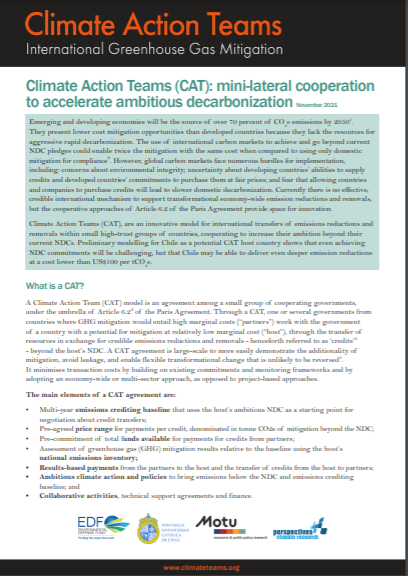
Climate Action Teams (CAT): mini-lateral cooperation to accelerate ambitious decarbonization
This policy brief introduces the Climate Action Teams (CAT) concept, an innovative way for countries to use the latest global climate summit (COP26) rulebook for international carbon markets, in a way that ensures environmental integrity and high emissions reduction ambition. The policy brief has been prepared in collaboration with EDF, Motu Research and Universidad Catolica de Chile. Available here .
PCG · Perspectives Climate Group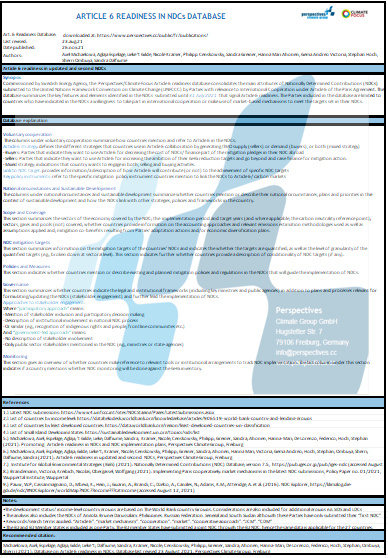
Database - Article 6 readiness in NDCs
Commissioned by Swedish Energy Agency, the Perspectives/Climate Focus Article 6 readiness database consolidates the main attributes of Nationally Determined Contributions (NDCs) submitted to the United Nations Framework Convention on Climate Change (UNFCCC) by Parties with relevance to International Cooperation under Article 6 of the Paris Agreement. The database summarizes the key features and elements identified in the NDCs submitted until 31 July 2021 that signal Article 6 readiness. The Parties included in the database are limited to countries who have indicated in the NDCs a willingness to take part in international cooperation or make use of market-based mechanisms to meet the targets set in their NDCs. Perspectives authors: Axel Michaelowa, Aglaja Espelage, Philipp Censkowsky, Hanna Mari Ahonen, Stephan Hoch, Sherri Ombuya, Sandra Dalfiume Access the database here.
PCG · Axel Michaelowa et al.
Development of guidance for nonmarket approaches in the Paris Agreement
In addition to market mechanisms, Article 6 of the Paris Agreement (PA) defines "non-market approaches", which are explored in more detail in this project. At the request of some developing countries, these approaches stand as a complement to the market mechanisms for cooperation in meeting the mitigation contributions of the PA and are intended to enable a holistic approach to the goals of mitigation and adaptation, rather than focusing exclusively on a quantified consideration of emission reductions. This report shows how a design without redundancy to existing processes under the Framework Convention on Climate Change could look like. The report is addressed to international experts, in particular to delegates to the climate conference as well as observers.
PCG · Axel Michaelowa et al.
Dynamic "Ambition coefficient" to make baselines for international carbon markets consistent with long term Paris Agreement targets
The discussion how to make baseline setting for international carbon markets consistent with the long-term ambition of the Paris Agreement is playing an important role in the negotiations about Article 6 rules. We propose using an "ambition coefficient" to be applied to baseline methodologies developed under the Clean Development Mechanism (CDM) under Article 6. The coefficient would decline over time - it starts at 100% and falls to 0 in the year when the host country of the activity needs to attain net zero emissions.
PCG · Axel Michaelowa
Ensuring transparency of Article 6 cooperation: designing robust and feasible reporting and review processes and building capacities
The discussion paper, prepared in the context of the Carbon Market Mechanisms Working Group, discusses how transparency of Article 6 cooperation can be ensured. More specifically, it discusses optimisation options of the envisioned operationalisation of accounting, reporting and review processes under Article 6 and their links to reporting and review processes under the enhanced transparency framework of Article 13. Building on the Article 6.2 and 6.4 negotiation draft texts and the recent developments at informal discussions in June and September 2021, the authors derive concrete recommendations to refine the provisions at the 26 th Conference of the Parties.
PCG · Juliana Keßler & Axel Michaelowa
Financial additionality tests for cooperation under Article 6 of the Paris Agreement: case study Peru
Governments hosting mitigation activities need to undertake a set of assessments to identify which activities could be eligible for Internationally transferred mitigation outcomes (ITMOs) in the context of Article 6 of the Paris Agreement (PA). One of these assessments is additionality testing. This report first introduces how financial additionality testing was applied to CDM projects in Peru. The report then develops the theoretical concepts for undertaking financial additionality tests at higher levels of aggregation (e.g., technology, subsector, and sector) in the context of Article 6 of the PA, using examples from the Peruvian energy sector. Two scenarios are presented. In the first one, activities are deemed automatically additional when it is possible to demonstrate that they do not generate revenues and are regulatory and policy additional. The second scenario focuses on activities that generate revenues or savings. For industrial sectors with homogeneous technologies and activities that involve small-scale appliances, the suggested additionality test is performance benchmarks. For commercial activities that require investments, payback period thresholds testing is recommended.
PCG · Axel Michaelowa & Sandra Dalfiume
Green Cooling in updated NDCs: Are we embarking on an ambitious path or a journey into a cooling crisis? How to achieve more ambition with Green Cooling approaches
Green Cooling plays an essential part in achieving a net zero greenhouse gas (GHG) transition and ensuring sustainable development. Despite the considerable mitigation potential of the cooling sector, it has hardly been mentioned in the first round of NDCs of many countries or has even been completely ignored. The study assesses the current status of cooling sector integration in countries’ updated NDCs and seeks to clarify if there have been any changes or even increase of ambition compared to the first pledges. It further provides two country examples which demonstrate approaches for successful incorporation of the cooling sector in updated NDCs. The publication is available here .
PCG · Daniela Laßmann & Axel Michaelowa
GUIDE DES NÉGOCIATIONS: 26e session de la Conférence des Parties à la Convention-cadre des Nations Unies sur les changements climatiques (CdP26)
Le Guide des négociations est un document réalisé annuellement par l’OIF/IFDD pour accompagner les sessions de la Conférence des Parties (CdP) à la Convention-cadre des Nations Unies sur les changements climatiques (CCNUCC). Compte tenu du contexte inédit induit par la pandémie de Covid-19, et du report des sessions formelles à 2021, le présent document complète l’édition 2020 du Guide , en incluant des éléments de mise à jour pour la période 2020-2021. Pour une présentation plus détaillée des enjeux et disposer d’éléments complémentaires de contexte et d’historique, le lecteur est donc invité à se référer également à la version 2020 du Guide . Comme chaque année, le Guide concourt à rendre accessible une présentation dynamique des enjeux. Répondant à cet objectif d’information, et alors que d’importantes décisions devront aboutir dès la reprise d’activités formelles à Glasgow, ce document entend ainsi s’inscrire dans une dynamique positive et constructive pour une CdP26 réussie et ambitieuse. À ce titre, il propose d’abord un décryptage des résultats clés de la dernière CdP (Chili/Madrid, 2019), ainsi que des éléments de mise à jour pour 2020-2021, en faisant ressortir les perspectives associées pour Glasgow. Une seconde partie propose un cadre de lecture indicatif des incidences de la pandémie sur le processus de la CCNUCC et des dispositifs inédits mis en place pour s’y adapter. Enfin, une annexe inclut des éléments généraux et complémentaires pour dresser un cadre contextuel. L’ensemble des informations est actualisé à la date du 2 octobre 2021.
PCG · Axel Michaelowa & Kaja Weldner
International bulk purchasing as an NMA
Article 6.8 of the Paris Agreement recognises the importance of “non-market approaches” (NMAs) to assist Parties in implementing their Nationally Determined Contributions (NDCs). The definition and scope of NMAs is very broad: they include all types of measures, instruments, and interventions that do not lead to a transfer of mitigation outcomes, and they cover mitigation, adaptation, finance, technology transfer, and capacity building. NMAs are by far the least well defined of the three Article 6 approaches. There is therefore a need to explore their potential in concrete terms, and with concrete examples.
PCG · Axel Michaelowa & Anne-Kathrin Sacherer
International coordination and policy instruments to promote a hydrogen economy: a focus on the steel-making industry
This policy brief explores the importance of international cooperation in the development of a global hydrogen economy with a focus on the steel-making industry. Green hydrogen is gaining significant momentum and will become a key component of decarbonization strategies, enabling low-carbon energy storage and transportation. However, barriers to the production of cost-competitive hydrogen still exist. To address them, policy responses for supporting green hydrogen applications should be coordinated at international level through a dedicated institution driven by the Group of Twenty (G20). This initiative will look at options for reducing the production costs, but also at joint cross-border investments, trading rules and technology transfer. “Lighthouse” pilot activities can be implemented through the international market mechanisms under the Paris Agreement on climate change. This policy brief evaluates pathways and suggests enabling policy mechanisms for decarbonizing the steel industry through the use of green hydrogen and for its deployment at scale.
PCG · Dario Brescia, Sonja Butzengeiger & Axel Michaelowa
International Governance of Climate Engineering. Information for policymakers
Some climate engineering technologies are being developed to remove CO2 from the atmosphere (carbon dioxide removal, CDR), which is expected to contribute to reducing and preventing climate change. Some other technologies (solar radiation modification, SRM) would artificially cool the planet and could reduce some symptoms and risks of climate change. Meaningful steps may need to be taken soon to lay a foundation for a decision process regarding research, policy, regulation and possible use. Driven by questions and needs from the international policymaking community to better understand the potential benefits as well as opportunities, risks, uncertainties and other challenges of CDR and SRM, at both technical and governance levels, this report reviews and compares technologies and their potential contributions, costs, risks, uncertainties, before surveying the current legal and institutional landscape of governance regarding climate engineering. It then addresses trade-offs between risks and discusses possible options for international governance, including criteria for evaluating options. The need for more inclusive approaches and the pros- and cons of institutional fragmentation are emphasized. Options for sites of international governance are discussed, for various technologies, as well as general principles and specific recommendations to: distinguish between CDR and SRM as well as among CDR techniques; accelerate authoritative, comprehensive, and international scientific assessment; encourage the research, development, and responsible use of some CDR techniques; internationally build capacity for evaluating CDR and SRM; facilitate non-state governance; and explore potential further governance of SRM while remaining agnostic concerning its use.
PCG · Matthias Honegger
Mobilising carbon dioxide removal through public policies & private financing
Carbon dioxide removals (CDR) complementing emission reduction efforts are needed to mitigate climate change. Many technological CDR options that could result in highly permanent removal of CO2 only exist as concepts or in very few pilot installations due to their high cost and lack of non-carbon revenue. By mapping the current public policy and private finance efforts toward CDR Perspectives’ experts find severe gaps. To align with expectations and existing targets, governments and private actors need to take several proactive steps to support and scale up CDR technologies. Only a systematically planned ensemble of policy instruments can ensure alignment with Paris Agreement objectives: One key challenge is to bring down the costs of technology-based options while avoiding rent-seeking. Allocating funding for research, development, and pilot activities transparently, competitively, and with continual assessment is key to ensure efficiency near-term. For effectiveness, and alignment with the long-term perspective of the Paris Agreement a gradual transition to more permanent policy instruments is then required.
PCG · Matthias Poralla et al.
NDC conditionality and Article 6: An analysis of African countries’ updated NDCs
The demarcation between conditional and unconditional targets continues to play an important role in the most recent NDC submissions. In developing countries, the conditional component has often been linked to international support, including through Article 6 carbon markets. However, the UNFCCC does not provide clear guidance on what NDC conditionality means and how to apply it. A lack of conceptual clarity opens space for different applications in NDCs, with potential consequences for access to Article 6 cooperative approaches. Based on reviewing relevant UNFCCC documents, literature assessing the first set of NDCs, Article 6 buyer documents, and an analysis of the latest African NDC submissions, this short study aims to provide a clearer understanding of how the conditionality of NDC targets may influence Article 6 cooperation. In the absence of international guidance, countries have developed their own interpretation of how to use the carbon market to achieve their updated NDCs. This study proposes a first typology for the link between NDC conditionality and Article 6 carbon markets. However, the study also argues that NDC conditionality alone is an insufficient indicator for Article 6 eligibility. Hence, it recommends undertaking further checks and balances at activity level to ensure environmental integrity. Nevertheless, the study suggests that working towards a shared understanding of NDC conditionality can increase the certainty of expectations in Article 6 cooperation and enhance transparency.
PCG · Stephan Hoch, Sandra Dalfiume & Axel Michaelowa
Paris Alignment of Export Credit Agencies: Japan (NEXI and JBIC)
Perspectives Climate Research developed a tailor-made methodology to assess and compare export credit agencies (ECAs) and their governments regarding their alignment with the Paris Agreement. In this case study, this assessment methodology was applied to the Japanese ECAs Nippon Export and Investment Insurance (NEXI) and Japan Bank for International Cooperation (JBIC). As a result of the assessment NEXI and JBIC were rated as ‘unaligned‘ with the Paris Agreement. The study illustrates the shortcomings and provides specific recommendations for Japan to review its position.
PCG · Laila Darouich, Igor Shishlov & Philipp Censkowsky
Paris Alignment of Export Credit Agencies: the case of Germany (Euler Hermes)
Perspectives Climate Research developed a tailor-made methodology to assess and compare export credit agencies (ECAs) and their governments regarding their alignment with the Paris Agreement. In this case study, this assessment methodology was applied to the German ECA Euler Hermes. As a result of the assessment Euler Hermes was rated as ‘unaligned‘ with the Paris Agreement. The case study also identifies the key gaps regarding the German ECA’s climate action and provides recommendations for improvement. Updated: 11/21
PCG · Laila Darouich, Igor Shishlov & Philipp Censkowsky
Paris Alignment of Export Credit Agencies: the Netherlands (Atradius DSB)
Perspectives Climate Research developed a tailor-made methodology to assess and compare export credit agencies (ECAs) and their governments regarding their alignment with the Paris Agreement. In this case study, this assessment methodology was applied to the Dutch ECA Atradius Dutch State Business (Atradius DSB). As a result of the assessment Atradius DSB was rated as ‘unaligned‘ with the Paris Agreement. The study formulates specific recommendations across all dimensions to align officially supported export finance, in the Netherlands and beyond, with the Paris Agreement.
PCG · Philipp Censkowsky, Igor Shishlov & Laila Darouich
Perspectives' new summary reports on Carbon Credit Generation through E-mobility (rural) Western Kenya
The executive summaries of a blueprint report and feasibility study explore the potential of carbon credit generation of an e-mobility project/programme in (rural) Western Kenya and East Africa. Both reports were commissioned by the Siemens Stiftung (Foundation) in the context of the P4G project “Accelerating e-mobility solutions for social change in rural Western Kenya". Read the executive summaries of the Feasibility study on carbon credit generation through e-mobility solutions in (rural) Western Kenya and A blueprint for carbon credit generation through E-Mobility solutions in rural Western Kenya .
PCG · Hanna-Mari Ahonen, Dario Brescia & Juliana Keßler
Promoting Article 6 readiness in NDCs and NDC implementation plans
The study provides guidance on how countries can design NDCs and NDC implementation plans, and use the information presented therein, to promote their Article 6 readiness and enable pursuit of international cooperation under the Paris Agreement in a manner that ensures environmental integrity and promotes transformational change. At the same time, this study aims to inform public and private stakeholders how to take into account NDC targets and implementation plans when designing Article 6 cooperation, setting up related processes and implementing tools.
PCG · Axel Michaelowa et al.
Revitalizing Eastern Africa’s Institutional Capacity To Engage In Global Carbon Markets
The study presents a summary of findings on how member countries of the Eastern African Alliance on Carbon Markets and Climate Finance (EAA) are beginning to enhance their institutional capacity for engaging in Article 6. These emerging institutional structures and associated responsibilities build directly on existing institutional frameworks and capacities established for the CDM and voluntary carbon markets. While EAA member countries have a strong interest in participating in Article 6 related activities, countries firmly understand and expect, though, that these national institutions and capacities originating from the CDM will need to be updated and expanded in order to meet all agreed UNFCCC requirements for participating in Article 6 cooperation. Findings of this study have been generated from country case studies that describe the national context in all seven EAA member countries (Burundi, Ethiopia, Kenya, Rwanda, Sudan, Tanzania, Uganda). The results have been synthesized in this report, which also draws on global and regional developments in the finalization of UNFCCC Article 6 rules, as well as beginning Article 6 cooperation.
PCG · Stephan Hoch et al.
Safeguarding integrity of market-based cooperation under Article 6
This background paper with inputs from the Carbon Market Mechanism Working Group and technical experts reflects the evolution of methodological approaches for additionality determination and baseline setting to date and explores their robust application to inform international discussions in the context of baseline-and-credit approaches under Article 6 of the Paris Agreement. Environmental integrity is the key principle underpinning carbon markets. It is imperative to ensure credible and robust approaches for additionality determination and baseline setting.
PCG · Hanna-Mari Ahonen et al.
Setting crediting baselines under Article 6 of the Paris Agreement
Our new discussion paper, with inputs from and for the Carbon Market Mechanisms Working Group, explores the ongoing discussions around setting crediting baselines for Article 6 market-based cooperation while securing NDC achievement and aligning carbon markets with long-term decarbonisation pathways. The authors identify opportunities for high environmental integrity but also challenges on the trade-off between dynamic baseline setting and investment security.
PCG · Axel Michaelowa & Hanna-Mari Ahonen
Sewage Treatment for the Skies
The mitigation of climate change to limit global warming to well below 2°C, as specified in the Paris Agreement, builds on two pillars. The first pillar, supported by most stakeholders but facing implementation challenges, is rapid and deep reduction of greenhouse gas (GHG) emissions from burning of fossil fuels and destruction of forests and other types of biomass. The second pillar, contested by many but increasingly seen as crucial, is carbon dioxide removal (CDR), i.e. the practice of actively removing CO2 from the atmosphere and durably storing it1 . Both pillars complement each other in the quest to achieve greenhouse gas-neutrality, a balance of emissions and removals.
PCG · Matthias Poralla et al.
Solar Radiation Modification - A “Silver Bullet” Climate Policy for Populist and Authoritarian Regimes?
Populist and authoritarian leaders are increasingly coming to power in large countries. They often have a climate sceptic approach and do away with mitigation policies when coming to power. Increasing impacts of extreme meteorological events linked to climate change could lead to a situation where the supporters of the populist leader or elites crucial for the survival of an authoritarian regime are pushing to do something to address climate change. In order not to lose power, the leader may look for quick and cheap solutions. In such a context, solar radiation modification (SRM), for example, by stratospheric aerosol injection (SAI), will become very attractive as it is likely to have low costs and rapid effects. Populist or authoritarian governments are unlikely to care for negative impacts of SRM abroad as they often act nationalistically with an explicit disdain for multilateral solutions. We discuss the incentive structure and political economy that populist and authoritarian leaders may face regarding unilateral use of SRM and elaborate how the international community could try to prevent or at least ‘contain’ such unilateral uses of SRM. Unfortunately, such ‘containment’ is contingent on the most powerful states not being populist or authoritarian regimes.
PCG · Axel Michaelowa
Taking the Natural Approach
Nature-based solutions (NbS) have recently attracted considerable interest in global environmental forums such as the UNFCCC and the Convention on Biological Diversity (CBD). They serve in addressing a considerable number of societal challenges and can also be deployed in adapting to and mitigating climate change. This has sparked a debate on if and how NbS might be integrated into global carbon markets. In this issue, Perspectives experts have contributed to two articles. Our experts analyse ways to transition CDM methodologies to make them fit for Article 6 market-based cooperation as well as looking at approaches for use in operationalising Articles 6.8 and 6.9 of the Paris Agreement.
PCG · Axel Michaelowa & Dario Brescia
The ‘HCFC adder’ in the Kigali Amendment baseline calculation
The Paris Agreement focuses on reducing greenhouse gas emissions, while the Kigali Amendment to the Montreal Protocol aims to control the production and consumption of a specific category of greenhouse gases, hydrofluorocarbons (HFCs). To achieve maximum possible climate change mitigation, it is essential to synchronize action under both regimes. Baseline definitions for HFC emission levels under the Kigali Amendment and in the context of the Paris Agreement differ. The former relates to production and consumption of HFCs, the latter to HFC emissions. One crucial and problematic aspect of the Kigali Amendment baseline is the proportion of hydrochlorofluorocarbon (HCFCs) that can be added to the HFC baseline. It can lead to a significant overestimation of baseline emission levels. The paper provides an in-depth assessment of developing countries’ HFC consumption paths and Kigali Amendment baseline levels. It discusses the implications on NDC reference scenarios and Article 6 baselines and suggests approaches how to safeguard environmental integrity through conservative baseline-setting.
PCG · Axel Michaelowa, Daniela Laßmann & Sven Feige
Urban components under Article 6 of the Paris Agreement
Urban areas cause over 70% of direct and indirect CO2-emissions worldwide. Carbon market mechanisms under Article 6 of the Paris Agreement can offer new opportunities for the mobilization of urban emission reduction measures and policies. This research project first examined the prevalence and experience of urban reduction projects within the framework of the Clean Development Mechanism (CDM), Nationally Appropriate Mitigation Actions (NAMAs) and Transformative Actions Programs (TAP). Building on this, conceptual approaches to the implementation of urban art. 6 activities were developed. In addition, the study discusses approaches to determine the additionality and various financing options for urban mitigation activities.
PCG · Sonja Butzengeiger, Axel Michaelowa & Kaja Weldner
Volumes and types of unused Certified Emission Reductions (CERs)
Commissioned by the Swedish Energy Agency, Z Perspectives and Zurich University of Applied Sciences studied the volume and origin of CERs that are still on the market, looking into information in the various national registries and the CDM registry. The study also draws lessons from the Kyoto Protocol on supply and demand in international carbon markets, as well as transparency and accounting (or the lack thereof). This analysis complements earlier studies on which CDM activities are still active and the potential additional supply of CERs in the instance of a renewed carbon price signal. Updated: 11/2021
PCG · Axel Michaelowa, Philipp Censkowsky & Aayushi Singh
Voluntary compensation of green gas emissions
The report explores the use of voluntary compensation by non-state actors in the context of their broader efforts towards and beyond carbon neutrality. It outlines how the concept and role of voluntary compensation, as well as related claims, are evolving in this new era of the Paris Agreement. The publication is available here .
PCG · Hanna-Mari Ahonen
G20 governments must urgently align their officially supported export credits with the Paris Agreement
An opinion article calling on G20 governments to align their export credit agencies with the Paris Agreement, warning that continued multi-billion-dollar ECA support for fossil-fuel projects aggravates the lock-in of carbon-intensive infrastructure and contradicts their climate commitments.
PCR · Igor Shishlov
Closing the deal on CDM transition
This short study seeks to contribute to the elaboration of the rules, modalities and procedures of the Article 6.4 mechanism. The transition from the Kyoto Protocol to the Paris Agreement has potentially strong impacts on the continuation of existing mitigation activities established through the CDM. This creates the need for a careful and selective transition process of methodologies and activities from the CDM towards the Article 6.4 mechanism. The study identifies key open issues and challenges concerning the transition of CDM methodologies, activities and units that Article 6 negotiators need to address in designing the transition process.
PCG · Stephan Hoch & Axel Michaelowa
A Precautionary Assessment of Systemic Projections and Promises From Sunlight Reflection and Carbon Removal Modelling
Climate change is a paradigmatic example of systemic risk. Recently, proposals for large-scaleinterventions - carbon dioxide removal (CDR) and solar radiation management (SRM) - have started to redefine climate governance strategies. We describe how evolving modelling practices are trending toward optimised and "best-case" projections - portraying deployment schemes that create both technically slanted and politically sanitized profiles of risk, as well as ideal objectives for CDR and SRM as mitigation-enhancing, time-buying mechanisms for carbon transitions or vulnerable populations. As promises, stylized and hopeful projections may selectively reinforce industry and political activities built around the inertia of carboneconomy. Some evidence suggests this is the emerging case for certain kind of CDR, where the prospect of future carbon capture substitutes for present mitigation. Either of these implications are systemic: explorations of climatic futures may entrench certain carbon infrastructures. We point out efforts and recommendations to forestall this trend in the implementation of the Paris Agreement, by creating more stakeholder input and strengthening political realism in modeling and other assessments, as well as through policy guardrails.
PCG · Matthias Honegger
Analysis of COVID-19 impacts and links between recovery polices and international carbon markets in developing countries
International carbon markets, especially baseline and credit systems, are an important component of international climate policy, and enshrined in Article 6 of the Paris Agreement. Our team analyses the effects of the COVID-19 pandemic and its corresponding containment, emergency response and recovery policies on key economic sectors in developing countries. Building on these insights, the team assesses the impacts of COVID-19 and corresponding policies on crediting policies, considering baseline setting and stringency of nationally determined contributions (NDCs) of developing countries.
PCG · Axel Michaelowa et al.
Approaches to measure adaptation benefits
This literature review aims to summarize approaches already been developed to measure adaptation benefits from existing and publicly available information from Funds (e.g. Results Management Frameworks) or other sources (e.g. adaptation publications on measuring adaptation activities) and to discuss their similarities and differences.
PCG · Axel Michaelowa & Laila Darouich
Article 6 piloting: state of play and stakeholder experiences
The Paris Agreement (PA) heralds a new era of international carbon market mechanisms. Its bottom-up nature and the fact that all countries under the PA have national commitments (nationally determined contributions, NDCs) to reduce greenhouse gas emissions, pose new challenges to the design of international carbon markets and related transactions. Under Article 6 of the PA, Parties can either pursue cooperative approaches (Article 6.2) or rely on a multilateral mechanism (Article 6.4) for the generation of internationally transferred mitigation outcomes (ITMOs). These instruments are to play a key role in enhancing national and global mitigation ambition, thus emphasising the transformational potential of future carbon markets. International negotiations on the finalisation of a rulebook for international carbon market co-operation in the context of the PA have failed at the 24th Conference of the Parties (COP24) in Katowice as well as at COP25 in Madrid in 2019. Negotiations have, however, progressed considerably on many important aspects. They are now scheduled for finalisation at COP26 in Glasgow in November 2021.
PCG · Axel Michaelowa et al.
Catalysing private and public action for climate change mitigation: the World Bank’s role in international carbon markets
This policy analysis examines the role of the World Bank in shaping and stimulating international carbon markets. Adopting a public choice perspective, we argue that its engagement can be understood as a response to the joint goal of reputational and financial benefits. The detailed empirical account of the Bank’s activities, from its pioneering role through the Prototype Carbon Fund in the early 2000s, to its initiatives for upscaled crediting subsequent to the 2015 Paris Agreement, is broadly in line with this interpretation. The period between 2005 and 2011 most clearly shows that the Bank was ready to forego some reputational benefits for the sake of financial benefits. During this period, it followed a flourishing privately driven carbon market, mostly competing with, rather than catalysing, private activities. After the Paris Agreement opened the door for a new phase of carbon markets, the Bank again took up a pioneering role, now focusing on the public sector. However, since transparency in relation to its activities is limited, thus reducing reputational risk, these activities may not meet the quality standards, notably with respect to additionality, that are a precondition for carbon markets to be an effective tool for climate change mitigation.
PCG · Axel Michaelowa et al.
CDM method transformation: updating and transforming CDM methods for use in an Article 6 context
In the context of crediting mechanisms for emission reduction projects, methodologies define how to set the crediting baseline, to test additionality, and to monitor and quantify emission reductions. They are therefore crucial for ensuring the environmental integrity of the carbon credits issued. The over 250 methodologies approved under the Clean Development Mechanism (CDM) of the Kyoto Protocol to the United Nations Framework Convention on Climate Change (UNFCCC) constitute the most important body of knowledge in this regard. Therefore, these methodologies are often used as a starting point in pilot activities for the use of market mechanisms under Article 6 of the Paris Agreement (PA). Given the absence of agreed rules on Article 6, it is unclear to what extent CDM methodologies will be formally transitioned into the Article 6.4 mechanisms. Under Article 6.2, countries can choose freely what methodologies to apply. Given that the CDM methodologies were developed prior to the adoption of the PA, they must be adapted or combined with new approaches to ensure that the underlying activity promotes an increase of mitigation ambition and does not jeopardise the achievement of the host country’s Nationally Determined Contribution (NDC). Moreover, given the lack of mandatory rules under the CDM to consider Agenda 2030 and its Sustainable Development Goals (SDGs), reporting and monitoring requirements for sustainable development (SD) contributions are generally absent. Under Article 6, cooperating Parties may wish to see stronger consideration of SD in the activity design and monitoring, reporting and verification (MRV) of SD impacts.
PCG · Axel Michaelowa & Dario Brescia
Climate change trust funds at multilateral development banks
Perspectives and the University of Zurich have done the first detailed study on the "hidden universe" of climate change-related financial vehicles at the multilateral development banks, on behalf of GIZ. These so-called "trust funds" have proliferated over recent years. While it took significant efforts to get a - still incomplete - dataset on trust fund operations from the banks, over 40 interviews allowed to provide a set of policy recommendations for trust fund reform. We propose to consolidate funds working on the same topics, or at least coordinate them through "umbrellas".
PCG · Igor Shishlov & Axel Michaelowa
Current state of the voluntary carbon market in Germany
The market for voluntary compensation of greenhouse gas emissions in Germany grew by 22% in 2019, illustrating that the voluntary GHG compensation market is playing an increasingly important role in international carbon markets. This is the result of a recent survey conducted by Perspectives Climate Group and Future-Camp on behalf of “Allianz für Entwicklung und Klima". The survey interviewed compensation providers operating in Germany as well as selected compensation consumers about the current status of the voluntary GHG compensation market. Further key findings of the study are that small and medium-sized companies in Germany accounted for the largest share of demand and that not only emission reduction, but also contribution to the achievement of SDGs are of importance to the overall compensation demanders. In addition to these and further interesting findings, the study also discusses the opportunities and risks of the voluntary market, including issues such as the credibility and transparency of certificates and market players, double counting and the role of COVID-19.
PCG · Perspectives Climate Group dena-Analyse Klimaneutralität
On behalf of the German Environment Agency (DENA), Perspectives has analysed how seemingly similar terms such as climate neutrality, greenhouse gas neutrality, carbon/ CO2-neutrality, net-zero emissions are often used erroneously as synonyms and how these concepts hold far-reaching implications for policy planning processes. As attention and salience of climate neutrality pledges rises, our the team seeks to offer conceptual clarity on the far-reaching implications for state and non-state actors. (Report in German only).
PCG · Matthias Honegger, Matthias Poralla & Axel Michaelowa
Do Multilateral Development Bank Trust Funds Allocate Climate Finance Efficiently?
The Paris Agreement has been celebrated as a breakthrough for international climate policy. However, relatively scant attention has been given to the emergent ecosystem of climate finance facilities that support it. We provide an overview of the rising number of climate-related trust funds at multilateral development banks (MDBs).
PCG · Axel Michaelowa & Igor Shishlov
ECBI summary of the Madrid COP results
The Oxford-based European Capacity Building Initiative (ECBI) run by Prof. Benito Müller is renowned for its crisp analyses of international climate negotiations. Axel Michaelowa and Aglaja Espelage contributed sections on market mechanisms and transparency rules to the ECBI analysis of the results of COP 25 in Madrid.
PCG · Axel Michaelowa
Ensuring That Covid-19 Recovery Policies Support The Transformation To A Climate Neutral Society
Governments worldwide have pledged trillions of dollars for economic recovery from the crisis triggered by the COVID-19 pandemic. Without a targeted approach, these recovery programs can lead to a lock-in of high-carbon technologies. This would block the transformation toward climate neutrality that is necessary to prevent a climate crisis. The Group of 20 (G20) should implement the following policy measures: Remove fossil fuel subsidies within three years. Target tax rebates and subsidy programs on labor-intensive, low emissions technology. Introduce policies to promote the continuation of behavioral changes acquired during the pandemic regarding online communication, meeting, and teaching tools. Regulate tourism providers to achieve zero emissions. Establish the infrastructure for low-carbon land transport and energy supply.
PCG · Axel Michaelowa & Sonja Butzengeiger
Germany’s contribution to the forest and climate protection programme REDD+
On behalf of DEval, Perspectives has prepared a synthesis study that provides evidence-based insights into the results and impact of REDD+ measures that have been designed, financed, and implemented by or on behalf of German actors. The study highlights heterogeneous results on the numerous REDD+ objectives. It also confirms the difficulties in countering deforestation and forest degradation, and in setting effective incentives vis-à-vis the powerful drivers behind forest destruction. Based on these findings, the authors derive several implications for improving and further developing REDD+ strategies and portfolios, coordination, transparent communication, and learning.
PCG · Anne-Kathrin Sacherer & Axel MichaelowaMobilising private climate finance for sustainable energy access and climate change mitigation in Sub-Saharan Africa
This journal article assesses how UNFCCC-backed climate finance instruments have engaged private investment for energy-focused climate mitigation in Sub-Saharan Africa. Three case studies from Ethiopia, Madagascar and South Africa illustrate how climate finance interacts with domestic policy instruments, including in relation to the Kyoto Protocol’s Clean Development Mechanism, South Africa’s domestic renewable energy auctions, and the Green Climate Fund. The paper finds that there is no ‘catch all’ success model and approaches need to be tailored to local circumstances. The article is available here .
PCG · Axel Michaelowa, Stephan Hoch & Anne-Kathrin Sacherer
NAMA Facility Donors Approve NSP in India
Perspectives and consortium partners supported GIZ India since 2014 in the development of a NAMA in the waste sector in India. As a first outcome, a "Feasibility Study for a Waste NAMA in India" was prepared and published in 2015 (the publication is available here ). Following a more detailed study related to "Co-Processing of Refuse Derived Fuel (RDF) from municipal solid waste (MSW) in Cement Kilns in India" (prepared 2017) and the preparation of an Outline for submission to the NAMA Facility, Axel Michaelowa and Sven Feige continued supporting GIZ during the Detailed Preparation Phase of the NSP and the development of the final Proposal. The NSP seeks to transform the Indian waste sector by scaling up and de-risking investment, strengthening the waste regulatory framework and ensuring uptake of the Reduce, Reuse and Recycle concept of an integrated circular-economy waste management system. The NAMA Facility notification is available here .
PCG · Perspectives Climate Group
Net-Zero Emissions Zurich: Negative emissions and certificate trading: potential, costs and possible courses of action
This (German language) report commissioned by the city and Kanton of Zurich seeks to build a basis for the political planning and implementation of sub-national net-zero emissions objectives in the case of Zurich. Part 1 offers initial overview of NETs that could possibly be implemented in Zurich, including an assessment of their mitigation potential and any associated costs. Part 2 explores the challenging role of offsetting toward net-zero.
PCG · Axel Michaelowa, Matthias Honegger & Matthias Poralla
Operationalizing Article 6.8 & 6.9 of the Paris Agreement
On 8 December, a virtual seminar took place that discussed the operationalisation of the Article 6.8 and 6.9 of the Paris Agreement which affirm the importance of non-market approaches (NMAs). The seminar featured presentations by climate negotiators, researchers and practitioners who laid out their view on the Article 6 negotiations and concrete examples for potential NMAs to be discussed in a future NMA forum.
PCG · Axel Michaelowa & Anne-Kathrin Sacherer
Policy brief: Carbon dioxide removal in climate change mitigation policy planning
This Perspectives policy brief outlines the rationale, opportunities, challenges and concrete steps for countries approaching carbon dioxide removal as a necessary form of mitigation for credible and ambitious climate change mitigation in line with the science and with broad societal support.
PCG · Matthias Honegger
Promoting carbon-neutral hydrogen through UNFCCC and national-level policies
Hydrogen can play an important role in a widespread transition to societies that emit low levels of greenhouse gases. However, "green" hydrogen-from renewable energy-and "blue" hydrogen-from fossil fuels with carbon capture and storage-still face significant cost gaps compared to "brown" hydrogen. We propose a dedicated institution that allows the Group of Twenty (G20) to coordinate national policy responses to support green and blue hydrogen applications, including support for "lighthouse" activities through, for example, bilateral collaboration under Article 6.2 of the Paris Agreement. This would accelerate the ramp-up of the global hydrogen market. The G20 countries should assess and introduce policy instruments that support quick transformation to green hydrogen economies. Moreover, we propose a G20 program to develop baseline and monitoring methodologies for generating emission credits under the market mechanisms of the Paris Agreement.
PCG · Sonja Butzengeiger & Axel Michaelowa
Promoting transparency in Article 6
Transparency plays a decisive role in ensuring both the integrity and success of market-based cooperation under Article 6 of the Paris Agreement. The study “Promoting transparency in Article 6” develops recommendations for ongoing UNFCCC negotiations to design a coherent and robust reporting and review cycle for market-based cooperation. With the draft Article 6.2 Guidance now clearly establishing a link between the ‘Enhanced Transparency Framework’ (ETF) and the ‘Biennial Transparency Reports’ with reporting on international carbon market activities, the study elaborates on how both negotiations on the ETF and on Article 6 can be synchronised to ensure a robust outcome. Promoting transparency in Article 6 - Summary for policymakers
PCG · Axel Michaelowa
Study on external and internal climate change policies for export credit and insurance agencies
Perspectives' new study on Export Credit Agencies (ECAs) reviews external policies and standards as well as internal policies and commitments that may affect ECAs’ portfolios, specifically their support to fossil fuel and low-carbon technology projects. The study shows that there is a severe lack of domestic and international policies to decarbonise officially supported export credits which still provide large amounts of public finance support to fossil fuel projects. While some ECAs have started taking first steps to decarbonise their portfolios the speed of this process must be urgently ramped up.
PCG · Igor Shishlov et al.
The Doha Amendment
The Doha Amendment ratification threshold by 144 Parties was reached on 2 October 2020 with the last-minute ratification by Nigeria. The Doha Amendment will thus enter into force on 31 December 2020, the last day of the second Commitment Period (CP2) of the Kyoto Protocol (KP). Doha Amendment severely limits trading of CP1 and CP2 units coming from ”hot air”. Perspectives' analysis shows that Kazakhstan, Iceland, Liechtenstein and Switzerland are likely to have deficits of Kyoto units at the end of CP2. While Kazakhstan never ratified the Doha Amendment, Iceland and Liechtenstein will fulfil their KP commitment together with the EU under the "bubbling" provision. Switzerland is thus the only Party that may have to purchase Kyoto units generating new demand of around 15 million tCO2e. Australia “escapes” a large deficit of units due to LULUCF accounting rules under the KP.
PCG · Perspectives Climate Group
Why lockdowns may prove deadly
In their contribution to the 'Covid-19-Diary', Axel und Katharina Michaelowa discuss the potentially fatal impacts of coronavirus lockdown measures in developing countries.
PCG · Axel Michaelowa
Update June 2019: Moving towards next generation carbon markets: Observations from Article 6 pilots
Following the positive response from readers, the study has been updated to reflect the dynamic process made in operationalizing Article 6. It contains additional information and highlights ongoing developments in Article 6 pilot activities supported through bilateral channels, regional organizations and multilateral development banks. The authors analyse emerging trends and early experience with Article 6 implementation and look particularly at how the pilots are responding to the new challenges posed by the Paris Agreement. This includes a discussion of the stronger role of governments in Article 6 cooperation, the relationship with NDC commitments, e.g. for challenges related to determining additionality and baselines, the need for tracking and accounting of ITMOs, sustainable development impacts and overall mitigation in global emissions.
PCG · Axel Michaelowa et al.
How to operationalize accounting under Article 6 market mechanisms of the Paris Agreement
Journal article published in Climate Policy , Volume 19 Issue 7, in which Axel Michaelowa and Benito Müller discuss options to operationalize accounting through corresponding adjustments under Art. 6 of the Paris Agreement. Find the article here.
PCG · Axel Michaelowa
Accelerating Action
On the occasion of the I4C 2019, this special issue of the Carbon Mechanisms Review (CMR) asks how carbon markets can best interact with other arenas in order to foster climate friendly development. With contributions from Perspectives’ Axel Michaelowa, Stephan Hoch, Matthias Krey and Aglaja Espelage.
PCG · Axel Michaelowa & Stephan Hoch
Additionality revisited: guarding the integrity of market mechanisms under the Paris Agreement
This paper provides recommendations on how to operationalize additionality under Article 6. The authors argue that activity-level additionality testing can only be waived if the host country agrees to an independent assessment of its NDC and this assessment finds that the NDC does not contain ‘hot air’. Unless these two conditions are fulfilled, the authors recommend specific additionality testing for all activities. The same is the case for activities not covered by the seller’s NDC. The authors call for bold approaches for assessing additionality of policies. To avoid cumbersome assessment of all activities, highly aggregated approaches are suggested, ranging from payback period thresholds for technologies mandated by regulation to minimum price levels triggered by carbon pricing policies.
PCG · Axel Michaelowa & Sonja Butzengeiger
Breakthrough of Hydrogen Technologies until 2030
This EDA Insight provides an overview of the current global climate and energy policies, the state of hydrogen technologies and demand today and until 2030. From this, it derives recommendations for how Gulf countries could position themselves in the emerging hydrogen markets, also with a view to economic diversification.
PCR · Axel Michaelowa & Sonja Butzengeiger
Carbon pricing opportunities in Senegal
Perspectives and the Senegalese consultancy Afrique Énergie Environnement find a carbon tax with careful redistribution as most promising carbon pricing opportunity for Senegal.
PCG · Axel Michaelowa, Igor Shishlov & Marjorie Ménard
COP 24 key outcomes
The Oxford-based European Capacity Building Initiative (ECBI) run by Prof. Benito Müller is renowned for its crisp analyses of international climate negotiations. Axel Michaelowa contributed sections on market mechanisms and transparency rules to the ECBI analysis of the results of COP 24 in Katowice.
PCG · Axel Michaelowa
Corresponding Adjustments under Article 6
In this study, Climate Focus and Perspectives discuss key challenges for Article 6 transfers of mitigation outcomes. The authors aim at making a step toward a better understanding of the several issues covered by Article 6, for example avoidance of double counting, additionality, environmental integrity as well as an enhanced usage of its scope. The study is supported by a grant from the Federal Ministry for the Environment, Nature Conservation and Nuclear Safety (BMU).
PCG · Axel Michaelowa
Ensuring Additionality of mitigation outcomes transferred through Article 6 of the Paris Agreement
This paper analyzes the implications of different interpretations of additionality for the market mechanisms under Article 6 and reflects on options how to anchor further additionality provisions in the negotiation text. The authors find that several quality criteria of mitigation outcomes are often discussed under the term additionality, but they need to be differentiated from one another. In the context of Article 6.2, additionality can be anchored through stringent international oversight, e.g. through the review of additionality by the A6TER. Particpating Parties can ensure additionality by applying stringent additionality test and controlling the quality of acquired ITMOs. In the context of Article 6.4, reliable additionality tests under the CDM can continue, with the addition of new tests for sectoral activities. Furthermore, options for additionality can be secured in the governance and responsibilities of the Article 6.4 Supervisory Body.
PCG · Axel Michaelowa & Kaja Weldner
Evaluation of the activities of the foundation "Future of the Carbon Market"
In this report, Perspectives Climate Group, Leaders Digest and Bild & Ernte evaluate the foundation “Future for the Carbon Market” initiated by the BMU, focusing on three different aspects: the foundation’s general concept and strategy, its supported projects/activities, and an outlook on the three remaining years in its lifecycle. The foundation has the objective to support programmatic approaches in international carbon markets through acquisition of emission credits (CERs) under the Clean Development Mechanism (CDM), as well as through consultancy and promotional activities for programmatic activities. The review concludes an overall positive evaluation of the foundation´s strategic mission and vision, and highlights the pros and cons of the utilized approach of upfront payment against future carbon revenues, including its potential application under Article 6 of the Paris Agreement.
PCG · Gunnar Geyer, Axel Michaelowa & Sonja Butzengeiger
Evolution of international carbon markets: Lessons for the Paris Agreement
First peer-reviewed overview of the history of international market mechanisms. The paper assesses how the Paris Agreement can greatly benefit from the past experience with international market mechanisms for greenhouse gas emissions reductions and related regulatory systems. Thereby, the authors highlight the following four periods with specific challenges: 1) the period from 1997–2004, in which the Clean Development Mechanism and Joint Implementation were operationalized, 2) the period between 2005 and 2011, in which the carbon markets expanded massively creating demand for the private sector, 3) the collapse in carbon prices between 2012 and 2014, and 4) a gradual stabilization of the international climate regime in 2015–2018. The study reveals that future carbon markets will face both old challenges, such as supply-demand balance, environmental integrity, transaction costs, and new ones, like interactions with other policies and national targets, and sectoral/policy baselines and additionality checks preventing hot air proliferation.
PCG · Axel Michaelowa, Igor Shishlov & Dario BresciaGoverning complexity: How can the interplay of multilateral environmental agreements be harnessed for effective international market-based climate policy instruments?
Major new multilateral environmental agreements (MEAs) have entered into force in 2016, including the Paris Agreement (PA) with nationally determined contributions (NDCs) for GHG reduction, the Kigali Amendment to the Montreal Protocol with a phase-down schedule for HFC production and use as well as CORSIA, an offset mechanism for GHG emissions. Regarding climate change mitigation, these MEAs are implicitly and explicitly linked to each other. However, the interaction effects between them have not yet been studied. This article assesses how the MEA interplay impacts the scope and effectiveness of international market-based climate policy instruments defined in Article 6 of the PA regarding NDC achievement. The article is available here .
PCG · Stephan Hoch, Axel Michaelowa & Anne-Kathrin Sacherer
How can existing national climate policy instruments contribute to ETS development?
The study analyses and evaluates national climate policy instruments, such as carbon taxes or green certificate trading schemes, regarding their suitability to serve as a basis for establishing emission trading systems (ETS). There is a general assessment of prototypical policy instruments. Besides, the report contains insights from case studies in India and Mexico. By Nicolas Kreibich, Sonja Butzengeiger-Geyer, Wolfgang Obergassel, Dian Phylipsen, Stephan Hoch, Axel Michaelowa, Valentin Friedmann, Björn Dransfeld, Hanna Wang-Helmreich.
PCG · Sonja Butzengeiger, Axel Michaelowa & Stephan Hoch
IFDD Negotiation Guide COP25
This negotiation guide reviews the progress in climate negotiations since COP24 and gives an overview of the negotiation issues ahead of COP25. Perspectives contributed with an overview of the issues related to Article 6, transparency, capacity building and technology transfer.
PCG · Axel Michaelowa & Kaja Weldner
Lessons learned from the first round of applications by carbon-offsetting programs for eligibility under CORSIA
This paper synthesizes key lessons learned from an assessment of the first 14 applications of carbon-offsetting programs for eligibility under CORSIA. The evaluation shows that the degree to which the applicants satisfy the ICAO requirements differs substantially. The authors recommend that ICAO clarifies several key matters for environmental integrity in the operationalization of its requirements and that it only approves programmes as soon as they fulfil all criteria, following a transparent review procedure. Furthermore, authors recommend that the Parties to the Paris Agreement include specific provisions in the international rules on Article 6 for how countries should account for offset credits used under CORSIA.
PCG · Axel Michaelowa
Markets, ambition and finance. COP 25: too much on the plate…
Axel Michaelowa, supported by the Perspectives COP 25 Team, shares his assessment of COP 25 negotiations, discussing markets, ambition and finance.
PCG · Axel Michaelowa
Moving Towards Next Generation Carbon Markets
The study written by Climate Focus and Perspectives provides the first comprehensive overview of about a dozen relevant ongoing Article 6 pilot activities supported through bilateral channels, regional organizations and multilateral development banks. It discusses how the pilots might shape the emerging rules for market mechanisms under the Paris Agreement.
PCG · Axel Michaelowa et al.
Negotiating cooperation under Article 6 of the Paris Agreement
The negotiations on market and non-market approaches to international cooperation under Article 6 of the Paris Agreement will take centre stage at COP 25 in Madrid. Our policy paper "Negotiating cooperation under Article 6 of the Paris Agreement" explains the crunch issues in Article 6 negotiations in generally accessible language and simple graphics. It was elaborated together with Benito Müller and the European Capacity Building Initiative (ecbi) and benefitted from inputs from Article 6 negotiators. The paper sheds light on the key differences between negotiating Parties on the eve of COP25 in Madrid. Understanding the issues and Party positions is a key step to identify solutions in these highly political and technically complex negotiations.
PCG · Axel Michaelowa
Net-Zero Emissions - The role of Carbon Dioxide Removal in the Paris Agreement
This Perspectives briefing report situates Carbon Dioxide Removal (or Negative Emissions Technologies) in the Paris Agreement: It analyzes the legal text to identify relevant provisions, institutions and processes and offers concrete suggestions on how and where removals can or should be considered in policy planning with a view to achieving an imagined future world where greenhouse gas emissions and removals are balanced: a net-zero emissions world.
PCG · Axel Michaelowa, Matthias Honegger & Matthias Poralla
Operationalizing the share of proceeds for Article 6
This short policy-oriented study seeks to contribute to the elaboration of the rulebook for carbon market instruments under Article 6 of the Paris Agreement. The tax on market mechanism activities (officially called “Share of Proceeds (SOP)”) is a key topic and priority for the African Group of Negotiators and other alliances. The objective of the study is to enhance the base of evidence for this discussion by providing an analytical background on previous experiences with the SOP under the CDM and current technical options as an input to the political negotiations. This study has been prepared in the context of the project Climate Finance Innovators: Linking carbon markets with climate finance in Africa .
PCG · Axel Michaelowa & Stephan Hoch
Opportunities for mobilizing private climate finance through Article 6
Together with Climate Focus and Frankfurt School of Finance & Management, Perspectives has analyzed how Article 6 market mechanisms can be designed to incentivize mobilization of private financing and to reorient global finance flows towards low-carbon development and climate resilience in line with Article 2.1c of the Paris Agreement. On the international level, private and public sector trust in Article 6 mechanisms must be enhanced through keeping transaction low while robustly safeguarding integrity. On the national level, mitigation policy instruments should incentivize demand for emission reduction units, while higher-cost private sector mitigation should be mobilized through effective blending of ITMO revenues with public climate finance.
PCG · Axel Michaelowa, Stephan Hoch & Kaja Weldner
Overview and comparison of existing carbon crediting schemes
In this study, commissioned by the Nordic Initiative for Cooperative Approaches (NICA), Perspectives compares international and domestic carbon crediting schemes at different levels of governance and of different geographical foci. The study highlights lessons learned from the schemes and the importance of taking these into account when operationalizing the Article 6 mechanisms.
PCG · Axel Michaelowa, Igor Shishlov & Stephan Hoch
Pricing of Verified Emission Reduction Units under Art. 6
Axel Michaelowa contributed to a study exploring scenarios on the development of key forces expected to drive carbon prices under Article 6. Building on a targeted literature review and a semi-quantitative analysis of ITMO generation costs and buyer's willingness to pay, select scenarios are presented to illustrate possible price evolutions.
PCG · Axel Michaelowa
Tipping the balance - Lessons on building support for carbon pricing
In this Policy Brief Perspectives, Adelphi and Climate Focus investigate key aspects in policy design and carbon pricing communications that help build support for the policy and contribute to its longevity. Six case studies of carbon pricing initiatives - Australia, British Columbia, Colombia, France, Sweden and Switzerland - are analyzed and provide unique lessons.
PCG · Axel Michaelowa & Stephan Hoch
Transition pathways for the Clean Development Mechanism under Article 6 of the Paris Agreement
This study assesses possible pathways for the CDM transition under Article 6 of the Paris Agreement, describing their practical implications and impacts on the global CDM portfolio and its potential eligibility under the Paris Agreement. The authors present the elements for the transition currently under negotiation and identify four pathways for the CDM transition, testing different levels of stringency for the transition criteria. It is necessary to avoid that of billions of CERs become eligible under Article 6 mechanisms, while at the same time encouraging CDM activity developers to continue their mitigation efforts. The study also assesses administrative requirements, transition procedures for CDM activities and how these could affect investments.
PCG · Perspectives Climate Group
Update June 2019: Moving Towards Next Generation Carbon Markets
The updated study contains additional information and highlights ongoing developments in Article 6 pilot activities supported through bilateral channels, regional organizations and multilateral development banks. The authors analyse emerging trends and early experience with Article 6 implementation and look particularly at how the pilots are responding to the new challenges posed by the Paris Agreement. This includes a discussion of the stronger role of governments in Article 6 cooperation, the relationship with NDC commitments, e.g. for challenges related to determining additionality and baselines, the need for tracking and accounting of ITMOs, sustainable development impacts and overall mitigation in global emissions. Perspectives authors:
PCG · Axel Michaelowa et al.
Written summary of COP25
This briefing by Axel Michaelowa provides an initial analysis of the negotiations as well as an overview of the key results of the negotiations.
PCG · Axel Michaelowa
Theory and International Experience on Voluntary Carbon Markets
This paper analyses the advantages and disadvantages of different types of incentives for voluntary carbon markets (VCMs). The authors examine the future of VCMs in the context of the Paris Agreement, in particular with respect to countries’ mitigation pledges under their Nationally Determined Contributions (NDCs).
PCG · Axel Michaelowa & Igor Shishlov
Africa is getting ready for Article 6
Nicole Krämer, Stephan Hoch, Ousmane Fall Sarr, Thiago Chagas, Tobias Hunzai, Axel Michaelowa, and Sandra Greiner show that active participation of African countries in designing Article 6 guidance and rules as well as the early onset of piloting activities are at the core of fostering Africa’s long-term position in the emerging carbon markets.
PCG · Axel Michaelowa & Stephan Hoch
Policy instruments for limiting global temperature rise to 1.5°C: can humanity rise to the challenge?
Editorial published in Climate Policy discussing the political economy of introducing 1.5°C-compatible mitigation policy instruments as well as the design of incentives to achieve a fast and deep 1.5°C-compatible transformation consistent with desired development pathways.
PCG · Axel Michaelowa
Carbon Removal and Solar Geoengineering: Potential implications for delivery of the Sustainable Development Goals
Honegger, M., Derwent, H., Harrison, N., Michaelowa, A., & Schäfer, S. (2018) Carnegie Climate Geoengineering Governance Initiative, May 2018, New York, U.S.
PCG · Axel Michaelowa & Matthias Honegger
Cooperative approaches under Art. 6.2 of the Paris Agreement
The informal note that is the outcome of the negotiations the cooperative approaches under Art. 6.2 of the Paris Agreement at COP 23 shows the tension between two lines of positions. The first line wants to minimize international oversight, ideally limiting it to the accounting of ITMOs, whereas the second proposed to introduce international oversight comparable to that for Art. 6.4. The Umbrella Group and Like-Minded Developing Countries but also AILAC support the former, Brazil, AOSIS and the EIG the latter. The EU and Canada take ....
PCG · Axel Michaelowa
Global Policy Instruments to Mobilize Carbon Dioxide Removal
Matthias Honegger and David Reiner discuss global policy instruments to mobilize Carbon Dioxide Removal.
PCG · Matthias Honegger
Linking the Clean Development Mechanism with the Green Climate Fund
PCG · Dario Brescia
Mitigation co-benefits of adaptation actions and economic diversification
Working paper prepared for the UNFCCC-Secretariat April 2018 by Axel Michaelowa, Sonja Butzengeiger, Marjorie Menard, Beatrice Verez
PCG · Axel Michaelowa, Sonja Butzengeiger & Marjorie Ménard
Mobilising private-sector investment to mitigate climate change in Africa
Discussion brief developed by Perspectives and published by the Stockholm Environment Institute reflecting on the role of the private sector in finance instruments for climate mitigation in Sub-Saharan Africa.
PCG · Stephan Hoch & Axel Michaelowa
Opportunities for Carbon Pricing in Viet Nam
Axel Michaelowa and Dario Brescia have contributed to a new study on the viable options for introducing a carbon tax in Viet Nam and its integration within the existing taxation framework. Anne-Kathrin Weber, Kaja Weldner and Mariana Acosta have provided additional inputs.
PCG · Axel Michaelowa & Dario Brescia
Raising ambition in HFC mitigation through markets
In this study commissioned by GIZ, Perspectives’ authors discuss how to finance HFC mitigation beyond the KA commitments. They propose an integrated approach of public finance and international market mechanisms under Article 6 of the Paris Agreement.
PCG · Axel Michaelowa & Stephan Hoch
The Paris Rulebook: missing pages after the Katowice decisions
Axel Michaelowa's summary and evaluation of COP24, its main outcomes and outlook for the coming years.
PCG · Axel Michaelowa
The Political Economy of Achieving 1.5°C
Axel Michaelowa, Sabine Reinecke, Stephan Hoch, Angela Geck, Mareike Blum, Matthias Honegger, and Cathrin Arenz take a detailed look at political economy aspects in the areas of climate finance and market mechanisms, forest and landscape restoration and use, and carbon dioxide removal.
PCG · Axel Michaelowa et al.
The political economy of negative emissions technologies: consequences for international policy design
Article published in Climate Policy reflecting on the mitigation potential of negative emissions technologies (NETs), particularly bioenergy with carbon capture storage and direct air capture and storage, and the possible design of international policy instruments needed to successfully mobilise these technologies.
PCG · Matthias Honegger
The political economy of negative emissions technologies: Consequences for international policy design
Article published in Climate Policy reflecting on the mitigation potential of negative emissions technologies (NETs), particularly bioenergy with carbon capture storage and direct air capture and storage, and the possible design of international policy instruments needed to successfully mobilise these technologies.
PCG · Matthias Honegger
Underwriting 1.5°C: competitive approaches to financing accelerated climate change mitigation
Article published in Climate Policy exploring the potential of auctioned price floors across a variety of sectors as a new class of instruments that can enhance the cost effectiveness of carbon pricing and complementary policies needed to achieve a 1.5 °C outcome. by Paul Bodnar, Caroline Ott, Rupert Edwards, Stephan Hoch, Emily F. McGlynn and Gernot Wagner
PCG · Stephan Hoch
A new perspective on the carbon market
Article published in IDB's Integration & Trade Journal: Volume 21: No. 41: March, 2017: Eco Integration in Latin America, p. 178-190 by Axel Michaelowa
PCG · Axel Michaelowa
Benefits of the Adaptation Benefit Mechanism for Ethiopia’s sustainable development
This scoping study explores the potential for the development and implementation of the Adaptation Benefit Mechanism (ABM) under Art. 6.8 of the Paris Agreement in Ethiopia. Spear-headed by the African Development Bank and several African countries, the ABM is an emerging “non-market mechanism” that could mobilize urgently needed resources for adaptation projects in developing countries.
PCG · Axel Michaelowa, Stephan Hoch & Dario Brescia
Detailed implementation plan for the NDC of Rwanda
This detailed implementation plan for Rwanda’s NDC looks at each measure listed in the NDC as well as further relevant measures and provides a prioritization of efforts based on stakeholder consultations undertaken in May and June 2017. It estimates the costs and sustainable development co-benefits of the measures as well as MRV of results, and suggests timelines for their implementation. Moreover, it assesses to which extent international financing for NDC measures can be mobilized through international institutions like the GCF, the Adaptation Fund, multilateral development banks, bilateral cooperation and market mechanisms under the Paris Agreement.
PCG · Axel Michaelowa
Documentation of IFAT 2016 Side Event Climate-friendly Waste Management through NAMAs in Emerging Economies and Developing Countries
PCG · Axel Michaelowa
Economic instruments
Book chapter in: Aerts, Jeroen; Mysiak Jaroslav (eds.): Novel Multi-Sector Partnerships in Disaster Risk Management, Brussels, 2017, p. 70-97 by Reinhard Mechler,, Manuel Pulido-Velazquez, Michel Koehler, Katie Jenkins, Swenja Surminski, Keith Williges, Wouter Botzen, Roger Cremades, Bjoern Dransfeld, Paul Hudson, Antonio Lopez-Nicolas, Anna Lorant, Maria Manez and Axel Michaelowa
PCG · Axel Michaelowa
Ensuring Additionality under Art. 6 of the Paris Agreement: Suggestions for modalities and procedures for crediting of mitigation under Art 6.2 and 6.4 and public finance provision under Art. 6.8
Discussion paper enhancing the debate on Article 6 by providing suggests for additionality rules in the context of NDCs and the Paris Agreeement. by Axel Michaelowa and Sonja Butzengeiger
PCG · Axel Michaelowa & Sonja Butzengeiger
Features and implications of NDCs for carbon markets
Report commissioned by the Swedish Energy Agency on international cooperation for climate change mitigation by Andrew Howard (Koru Climate), Thiago Chagas (Climate Focus), Jelmer Hoogzaad (Climate Focus) and Stephan Hoch (Perspectives)
PCG · Stephan Hoch
Guardrails for the Paris mechanisms: Operationalizing Article 6 and generating carbon market credibility
Analysis reflecting on how to operationalise Article 6 of the Paris Agreement and enhance carbon market integrity in the latest issue of Carbon Mechanisms Review Journal by Axel Michaelowa and Stephan Hoch
PCG · Axel Michaelowa & Stephan Hoch
IFDD Guide to the Negotiations: UNFCCC (COP23)
United Nations Framwork Convention on Climate Change: Twenty-third Conference of the Parties (COP23) by Stéphane Pouffary (ENERGIES 2050), Antoine Antonini (ENERGIES 2050), Frédéric Gagnon-Lebrun (IISD), Yanick Touchette (IISD), Alice Bisiaux (IISD), Kamel Djemouai, Axel Michaelowa (Perspectives), Matthias Honneger (Perspectives), Marjorie Menard (Perspectives), Aglaja Espelage (Perspectives), El Hadji Mbaye Diagne (Afrique-Energie–Environnement), Marc Freitas (Perspective Climat et Développement Durable), Guillaume De Laboulaye (ENERGIES 2050), Stéphane Quefelec (ENERGIES 2050) and Laurent Dittrick (ENERGIES 2050), Yael Pouffary (Energies 2050)
PCG · Axel Michaelowa, Matthias Honegger & Marjorie Ménard
SD-Benefits in Future Market Mechanisms under the UNFCCC
Final report on behalf of the Federal Environment Agency (Germany) by Björn Dransfeld and Stefan Wehner (The Greenwerk); Tanushree Bagh, Patrick Bürgi, Ingo Puhl and Madlaina Zegg (The South Pole Group); Valentin Friedmann, Stephan Hoch, Matthias Honegger, Axel Michaelowa, Linde Warland (Perspectives)
PCG · Axel Michaelowa & Matthias Honegger
Sectoral Implementation of Nationally Determined Contributions (NDCs)
This publication is part of a GIZ briefing series of NDC sectoral overviews, which provide information about current sectoral contributions to global greenhouse gas (GHG) emissions and prospects for implementing NDCs in these sectors. This paper presents the current situation and prospects for implementation of NDCs with a focus on solid waste management and circular economy. It outlines sources of GHG emissions, mitigation options as well as related policy and implementation measures. By Axel Michaelowa, Sven Feige, Jan Janssen, Johannes Paul, Pascal Renaud, Thomas Berlinghof
PCG · Axel Michaelowa & Sven Feige
The Paris Market Mechanisms’ Contribution to Global Greenhouse Gas Mitigation: Complementarities and Tensions between Article 6.2 and Article 6.4
Contribution to the Harvard Project on Climate Agreements on options for elaborating the Paris Agreement’s Article 6. by Axel Michaelowa
PCG · Axel Michaelowa
The Paris Market Mechanisms’ Contribution to Global Greenhouse Gas Mitigation: Complementarities and Tensions between Article 6.2 and Article 6.4
Contribution to the Harvard Project on Climate Agreements on options for elaborating the Paris Agreement’s Article 6. by Axel Michaelowa
PCG · Axel Michaelowa
Analysis of the MRV Issues Underlying the Development of a NAMA from a PoA in the Republic of Rwanda
PCG · Axel Michaelowa, Stephan Hoch & Matthias Honegger
Boosting climate action through innovative debt instruments
Combining debt for climate swaps and climate policy performance bonds, Concept Note by Axel Michaelowa, Abdeldjellil Bouzidi and Valentin Friedmann
PCG · Axel Michaelowa
De Paris à Marrakech ou le défi de la mise en oeuvre
Vingt-deuxième Conférence des Parties à la Convention-cadre des Nations Unies sur les changements climatiques (CdP22, CRP12 et CRA1) Guide des négociations by IFDD by Stéphane Pouffary (ENERGIES 2050), Sandra Freitas (Climate Analytics), Tosi Mpanu-Mpanu (Président du Groupe des PMA), Seyni Nafo (Ambassadeur Climat Mali), Antoine Antonini (ENERGIES 2050), Frédéric Gagnon-Lebrun (IISD), Yanick Touchette (IISD), Kamel Djemouai, Axel Michaelowa (Perspectives), El Hadji Mbaye Diagne (Afrique-Energie–Environnement), Guillaume De Laboulaye (ENERGIES 2050), Stéphane Quefelec (ENERGIES 2050) and Laurent Dittrick (ENERGIES 2050)
PCG · Axel Michaelowa
Enhancing Green Bond Transparency through CDM
Green bonds are a fast-growing instrument for channelling capital into the low-carbon transition, but the market faces growing concerns about greenwashing and a lack of accepted, comparable standards for reporting climate impact. This two-pager argues that climate benefit reporting for green bonds should be harmonised with established UNFCCC-approved Clean Development Mechanism (CDM) methodologies. The CDM has produced over 200 approved methodologies, tested in close to 10,000 projects across more than 100 developing countries, that are ready to use and cover most green bond project types. Applying simplified, standardised CDM methodologies would make ex-post impact assessment of green bond-financed projects faster, more cost-effective and more robust, giving investors credible proof of achieved mitigation results. by Axel Michaelowa, Stephan Hoch, Abdeldjellil Bouzidi and Valentin Friedmann
PCG · Axel Michaelowa & Stephan Hoch
How to transition from the CDM to the Sustainable Development Mechanism under the Paris Agreement
PCG · Axel Michaelowa & Stephan Hoch
Investing in ambition, Analysis of the financial aspects in (Intended) Nationally Determined Contributions
Study published by Perspectives and Germanwatch by Lutz Weischer, Linde Warland, David Eckstein, Stephan Hoch, Axel Michaelowa, Michel Koehler and Stefan Wehner, with contributions from Sven Harmeling, Julia Grimm, Valentin Friedmann and Linda Beyschlag
PCG · Axel Michaelowa & Stephan Hoch
Linking the Clean Development Mechanism with the Green Climate Fund: Models for scaling up mitigation action
Many stakeholders have put forward the idea of linking the Clean Development Mechanism (CDM) with the Green Climate Fund (GCF or Fund). The topic has been discussed within the secretariats and governing boards of both institutions but so far has not delivered documented analysis or conclusive results. At the Climate Change Conference held in Paris in December 2015, the discussion has been elevated to a formal issue on the agenda as Parties to the Kyoto Protocol encouraged the CDM Executive Board to explore new opportunities for financing of the CDM through international climate finance institutions such as the GCF. This report seeks to contribute to this debate by offering a systematic analysis of how linkages between the two institutions can be achieved and why this should be considered.
PCG · Dario Brescia & Stephan Hoch
Perspectives' evaluation of COP22 Marrakech
PCG · Axel Michaelowa
Prospects for Africa’s CDM activities under the Paris Agreement
Policy Briefing by Perspectives and ClimateFocus by Sandra Greiner, Stephan Hoch, Andrew Howard, Mandy Rambharos and El Hadji Mbaye Diagne
PCG · Stephan Hoch
Supporting Energy Pricing Reform and Carbon Pricing Policies Through Crediting
PCG · Axel Michaelowa, Stephan Hoch & Matthias Honegger
The Impact of INDCs, NAMAs and LEDS on Ci-Dev Operations and Programs
Report to the World Banks Carbon Initiative for Development by Axel Michaelowa, Stephan Hoch, Matthias Honegger, Valentin Friedmann and Frederic Hans
PCG · Axel Michaelowa, Stephan Hoch & Matthias Honegger
The Paris Agreement: The future relevance of UNFCCC-backed carbon markets for Africa
Policy Brief by Axel Michaelowa, Sandra Greiner, Stephan Hoch, Fabrice Le Saché, Dario Brescia, Hilda Galt, Sebastian Mayr, El-Hadj Mbaye Diagne
PCG · Axel Michaelowa, Stephan Hoch & Dario Brescia
Analysis of Possible New Market Mechanisms Pilot Activities beyond the PMR
Study for the German Federal Ministry for the Environment, Nature Conservation, Building and Nuclear Safety by Björn Dransfeld, Stephan Hoch, Axel Michaelowa
PCG · Axel Michaelowa & Stephan Hoch
Assessing Global Climate Engineering Governance: Policy Dialogue Brief
PCG · Matthias Honegger & Axel Michaelowa
Can debt for climate swaps be a promising climate finance instrument? Lessons from the past and recommendations for the future
PCG · Axel Michaelowa
Developing Sectoral Mechanisms in the Transition Period towards a New Climate Treaty - CLIMATE CHANGE 01/2015
Environmental Research of the Federal Ministry for the Environment, Nature Conservation, Building and Nuclear Safety Project No. (FKZ) 3713 41 506 Report No. (UBA-FB) 002026/E by Björn Dransfeld, Stephan Hoch, Matthias Honegger, Axel Michaelowa - Perspectives GmbH
PCG · Axel Michaelowa & Stephan Hoch Feasibility Study for a Waste NAMA in India
Report on behalf of the Deutsche Gesellschaft für Internationale Zusammenarbeit (GIZ) by Axel Michaelowa, Sven Feige, Matthias Honegger (Perspectives); Mikael Henzler, Jan Janssen, Sibylle Kabisch (adelphi); Atul Sanghal, Sunil Sharma (EVI); Pravinjith KP, Anita Kumari (ecoparadigm)
PCG · Sven Feige, Axel Michaelowa & Matthias Honegger
Linking CDM PoAs and NAMAs - Legal and technical challenges and design options
PCG · Axel Michaelowa, Stephan Hoch & Matthias Honegger
Market Mechanisms: Incentives and Integration in the Post-2020 World
Study commissioned by the Federal Office of Environment FOEN by Axel Michaelowa, Jürg Füssler, Matthias Honegger, Stephan Hoch, Linde Warland, Tyeler Matsuo, Martin Herren, Alexander Wunderlich and Charlotte Streck Berne: Federal Office of Environment FOEN
PCG · Axel Michaelowa, Matthias Honegger & Stephan Hoch
Methodology for CDM eligibility criteria definition
Study for KfW - Kreditanstalt für Wiederaufbau by Stephan Hoch, Axel Michaelowa, Björn Dransfeld, Matthias Honegger - Perspectives GmbH - and Dominik Englert, Luzia Bieri, Urs Brodman, Ricarda Alt
PCG · Stephan Hoch, Axel Michaelowa & Matthias Honegger
New climate investments must strengthen sustainable development and minimize trade-offs
PCG · Axel Michaelowa & Stephan Hoch
Practicability of transitioning from CDM to future climate policy instruments - Synthesis Report
Ufoplan Vorhaben (FKZ) 12 41 158 by Björn Dransfeld, Aki Kachi, Dennis Tänzler, Stephan Hoch, Lena Ruthner, Axel Michaelowa Perspectives GmbH
PCG · Axel Michaelowa & Stephan Hoch
Progress and potential of CDM reform and post-Paris market mechanisms for Africa Policy Briefing
PCG · Axel Michaelowa & Stephan Hoch
Transforming from INDCs to NDCs in Africa
PCG · Axel Michaelowa, Stephan Hoch & Matthias Honegger
Saved health, saved wealth: an approach to quantifying the benefits of climate change adaptation
This report presents a methodological approach for project developers to estimate, monitor and evaluate the actual outcomes of their adaptation activities. This framework consists of two key metrics; Saved Wealth and Saved Health. Saved Wealth quantifies the monetary value protected by adaptation efforts, including public infrastructure, private property, and income, while Saved Health measures the health impacts avoided, such as disease, disability, and premature death. This framework is applied in a case study on coastal protection in Vietnam and enables to compare, ex-ante, the expected benefits of two adaptation options (a mangrove rehabilitation programme vs. a dyke upgrade). The report also highlights the relevance of the framework for measuring project impacts ex-post, e.g.
PCG · Axel Michaelowa
Stay current